
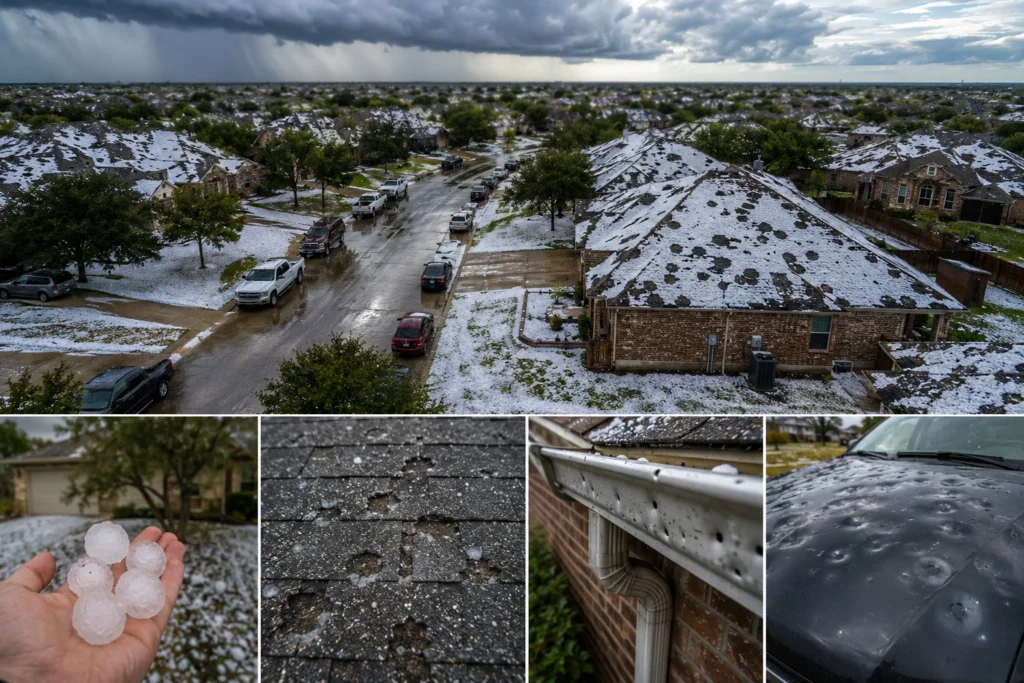
A hailstorm can strike without much warning. One moment the sky is clear. The next, ice is pounding your roof, gutters, windows, and siding. For Texas homeowners, the aftermath can be expensive. Even when a roof appears unharmed from the ground, hidden damage may already be compromising its ability to protect the home. That’s why understanding the roof hail damage insurance claim Texas process is so important. The decisions you make in the hours and days after a storm can significantly impact your ability to recover the full cost of repairs.
Many property owners wait until a leak appears before investigating roof damage. Unfortunately, by that point, minor hail impacts may have evolved into major problems. Water intrusion, mold growth, insulation damage, and structural deterioration can all result from hail damage that initially seemed insignificant. The good news is that homeowners can take proactive steps to protect their property and strengthen their insurance claims. By learning how to identify hail damage, document evidence, understand carrier inspections, and navigate claim negotiations, you’ll be better prepared when severe weather strikes. This guide covers everything you need to know about filing a successful roof hail damage insurance claim Texas homeowners face after a major storm.
Understanding Hail Damage and Why It Matters
Not every hailstorm causes serious roof damage. However, when hailstones reach sufficient size and velocity, they can significantly affect roofing materials. The resulting damage isn’t always visible from the street. In fact, some of the most costly roof failures begin with impacts that seem relatively minor.
The challenge is that roofing systems are designed to withstand normal weather conditions. Hail creates concentrated points of impact that can weaken protective materials without causing immediate leaks. As a result, many homeowners mistakenly assume their roof escaped damage simply because water isn’t entering the home. That’s often not the case.
Why Hail Damage Can Become Worse Over Time
When hail damages roofing materials, it may remove protective surfaces or create fractures that expose underlying components.
Over time, those weakened areas become vulnerable to:
- UV exposure
- Rain penetration
- Wind-driven moisture
- Thermal expansion and contraction
- Premature aging
A roof that survives one storm may become significantly more vulnerable during the next. This is why prompt inspections matter.
Why Insurance Companies Carefully Evaluate Hail Claims
Hail claims represent a significant portion of property insurance losses throughout Texas. Because repair costs can be substantial, insurance carriers rely heavily on documentation and inspections before approving coverage.
They typically evaluate:
- Storm severity
- Physical evidence of damage
- Roof condition before the storm
- Age of roofing materials
- Repair versus replacement requirements
For homeowners, this means evidence matters. The stronger your documentation, the stronger your claim.
How to Identify Hail Damage by Roof Type
Not all roofs respond to hail in the same way. An impact that leaves visible damage on asphalt shingles may create entirely different issues on metal or tile roofing systems. Understanding these differences helps homeowners recognize potential damage and communicate more effectively during the claims process.
Asphalt Shingle Roof Hail Damage
Asphalt shingles remain one of the most common roofing materials in Texas. Unfortunately, they’re also among the most susceptible to hail impacts.
Common Signs of Hail Damage on Asphalt Shingles
Look for:
- Circular impact marks
- Missing granules
- Exposed asphalt mat
- Soft bruised spots
- Cracked shingles
- Random damage patterns
Granules serve a critical function. They protect shingles from sunlight and environmental wear. When hail removes granules, shingles may deteriorate more quickly and become vulnerable to future leaks. A damaged shingle often feels softer than surrounding materials because the internal structure has been crushed by impact.
Damage Commonly Mistaken for Hail
Not every roof imperfection indicates storm damage.
Several conditions may resemble hail impacts.
| Condition | Commonly Misidentified as Hail |
| Blistering | Yes |
| Manufacturing defects | Yes |
| Thermal cracking | Yes |
| Foot traffic damage | Yes |
| Age-related deterioration | Yes |
This distinction is important because insurance companies evaluate whether damage was caused by a covered event rather than normal wear and tear.
Metal Roof Hail Damage
Metal roofing systems offer excellent durability. However, even metal roofs can suffer hail-related damage.
Signs of Hail Damage on Metal Roofs
Common indicators include:
- Dents
- Dings
- Surface deformation
- Bent seams
- Damaged flashing
- Coating damage
Some dents may appear cosmetic initially. However, cosmetic damage doesn’t always tell the whole story.
When Cosmetic Damage Becomes Functional Damage
Repeated impacts can compromise:
- Protective coatings
- Water-shedding capabilities
- Structural performance
- Long-term durability
Over time, seemingly minor dents may contribute to corrosion or water intrusion. This is why every hail damage on roof insurance claim deserves a thorough inspection.
Tile Roof Hail Damage
Tile roofs are known for longevity. Nevertheless, they remain vulnerable to impact damage.
Concrete Tile Damage
Common signs include:
- Surface fractures
- Corner breaks
- Impact craters
- Cracked sections
- Chipped edges
Even small fractures can allow water to bypass the tile system and reach underlying components.
Clay Tile Damage
Clay tiles often experience:
- Hairline cracks
- Hidden fractures
- Broken corners
- Displaced tiles
- Penetration damage
Because some damage is difficult to see from the ground, professional inspections become especially important.
Why Professional Roof Inspections Matter
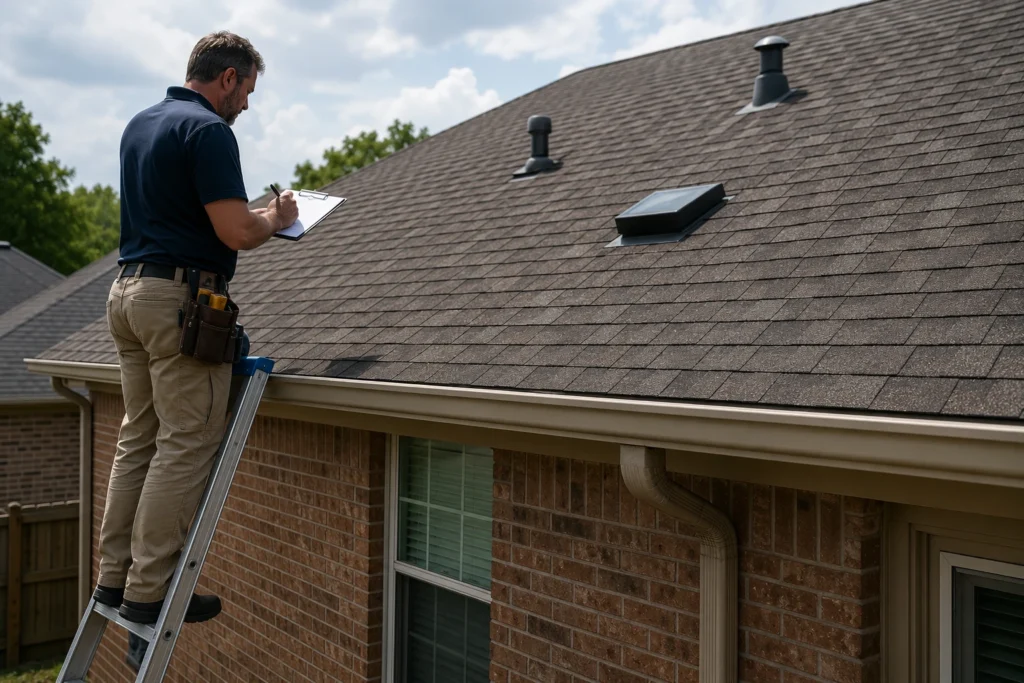
Roof inspections are about more than identifying visible damage.
They involve determining:
- Extent of impacts
- Functional impairment
- Repair requirements
- Replacement considerations
Experienced inspectors often use:
- Drone photography
- High-resolution imaging
- Detailed measurements
- Moisture detection tools
These methods help identify damage that homeowners may overlook.
Immediate Steps to Take After a Hailstorm
The period immediately following a hailstorm is critical. What you do next can affect both your roof and your insurance claim.
Prioritize Safety First
Your first responsibility is protecting yourself and your family. Avoid climbing onto the roof. Storm-damaged roofs can be slippery, unstable, or structurally compromised.
Instead:
- Stay on the ground
- Observe conditions safely
- Watch for electrical hazards
- Check for obvious structural concerns
No photograph is worth risking injury.
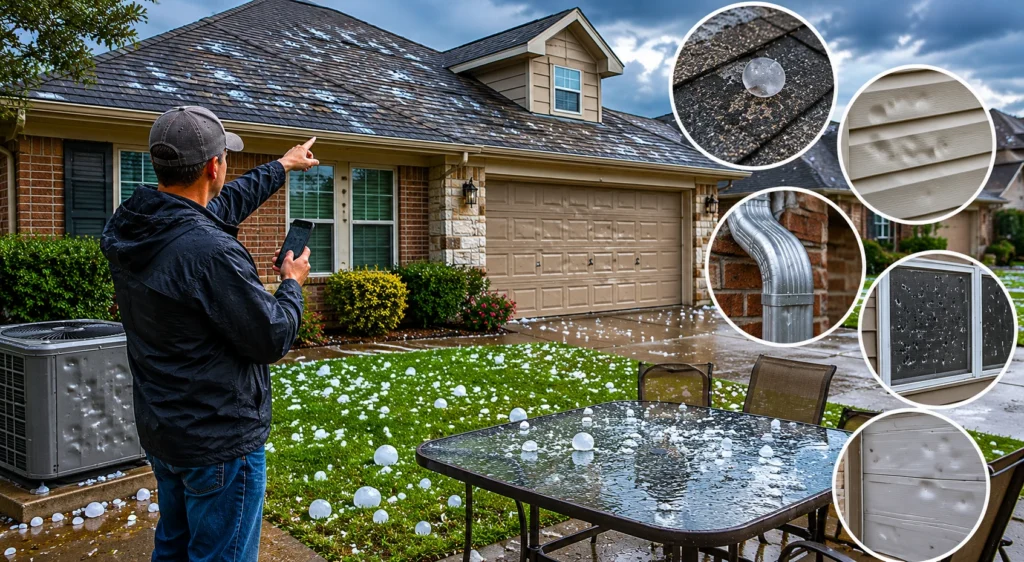
Perform a Ground-Level Inspection
Once conditions are safe, walk around the property.
Look for evidence of impact damage on:
- Gutters
- Downspouts
- Siding
- Window screens
- Garage doors
- Air conditioning units
- Outdoor furniture
Collateral damage often helps demonstrate storm severity. If hail dented these surfaces, your roof may also have been affected.
Prevent Further Damage
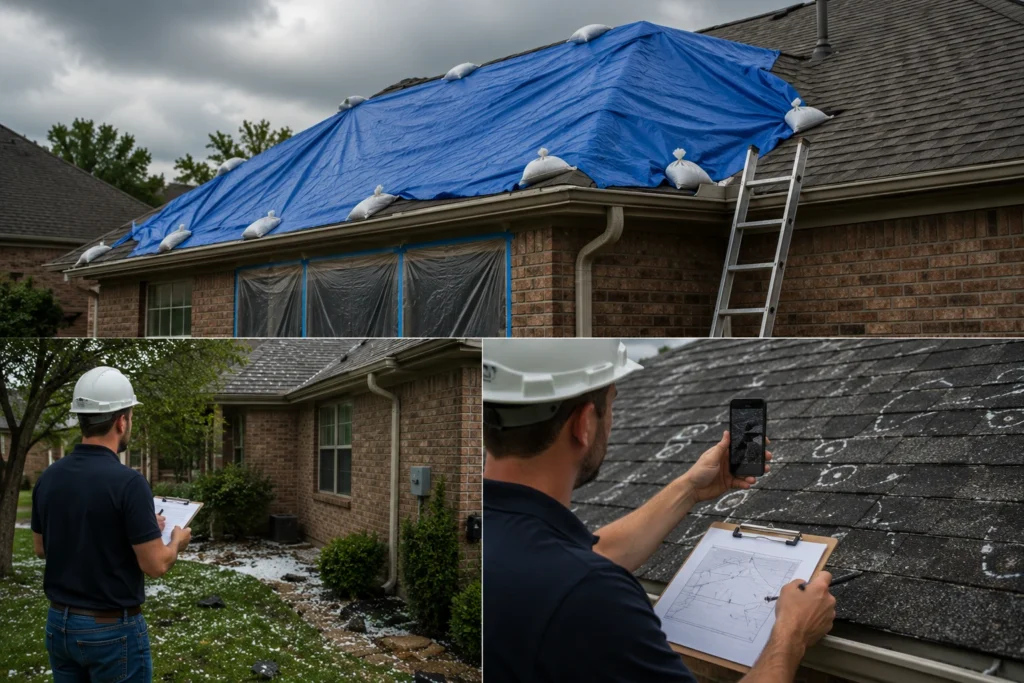
Insurance policies generally require homeowners to mitigate additional losses.
Reasonable mitigation measures may include:
- Temporary tarping
- Covering broken windows
- Protecting interior belongings
- Managing water intrusion
Save all receipts associated with emergency repairs. These expenses may become part of your claim.
Schedule an Independent Roof Inspection
A qualified roofing professional can help determine whether hail caused functional damage.
Their inspection may include:
- Roof measurements
- Damage mapping
- Photo documentation
- Repair recommendations
This information often becomes valuable evidence later.
Notify Your Insurance Company Promptly
Most policies contain reporting requirements. Delaying notification may complicate the claim process.
When contacting your carrier:
- Provide the storm date
- Describe visible damage
- Request an inspection
- Record claim information
Keep detailed notes regarding every conversation. Organization pays dividends throughout the process.
How to Document Hail Damage for an Insurance Claim
Documentation frequently determines whether a claim succeeds or struggles. Insurance companies rely heavily on evidence. That’s why homeowners should approach the process methodically. In many ways, documenting storm damage resembles conducting a detailed forensic investigation. Every photograph, inspection report, and repair estimate contributes to the overall picture.
Take Comprehensive Photographs
Photographs provide objective evidence. Take more than you think you’ll need.
Exterior Documentation
Photograph:
- Roof slopes
- Flashing
- Gutters
- Downspouts
- Skylights
- Vents
- Siding
- Detached structures
Capture both wide-angle and close-up images. Wide shots establish context. Close-ups reveal detail. Together, they tell a complete story.
Interior Documentation
Don’t overlook interior damage.
Photograph:
- Ceiling stains
- Water spots
- Attic leaks
- Damaged drywall
- Insulation concerns
Interior evidence often helps connect roof damage to resulting losses.
Gather Supporting Evidence
Strong claims rely on more than photographs.
Additional documentation may include:
- Weather reports
- Storm tracking information
- Roofing inspections
- Repair estimates
- Maintenance records
- Emergency repair receipts
Every document strengthens the claim file.
Create a Damage Timeline
Maintaining a timeline helps organize information.
| Event | Date |
| Storm occurrence | Date |
| Damage discovered | Date |
| Initial inspection | Date |
| Claim reported | Date |
| Carrier inspection | Date |
| Follow-up actions | Date |
Timelines reduce confusion and support consistency throughout the claim process.
Organize Your Claim File
Keep all records together.
Include:
- Photographs
- Emails
- Estimates
- Inspection reports
- Receipts
- Claim correspondence
A well-organized file simplifies negotiations and future reference.
Why Documentation Strengthens a Claim
The more evidence available, the stronger your position becomes.
Documentation supports:
- Damage verification
- Scope accuracy
- Supplemental requests
- Settlement negotiations
Simply put, organized evidence helps reduce disputes.
The Insurance Claim Inspection Process
After you report a claim, the insurance company will schedule an inspection. This inspection plays a major role in determining what is covered and how much compensation may be available. Understanding the process helps homeowners prepare effectively and avoid common mistakes. The next phase involves evaluating the carrier’s inspection, identifying missing items, understanding supplements, and learning why professional representation often changes outcomes.
What Insurance Adjusters Typically Look For
Once a claim is reported, the insurance company assigns an adjuster to inspect the property. Their objective is straightforward. Determine whether covered storm damage exists and estimate the cost of repairs.
During the inspection, adjusters commonly evaluate:
- Roofing materials
- Ridge caps
- Flashing
- Gutters
- Downspouts
- Vents
- Skylights
- Exterior elevations
- Additional structures
The inspection findings form the foundation of the carrier’s estimate. However, not every inspection is equally thorough. Some inspections involve detailed roof walks, measurements, and extensive photography. Others may be considerably shorter. That’s why homeowners should understand what is being evaluated and how those findings affect a roof hail damage insurance claim Texas property owners submit after severe weather.
Common Challenges During Roof Inspections
Even experienced adjusters face challenges.
These may include:
- Steep roof pitches
- Safety limitations
- Limited roof access
- Hidden damage
- Time constraints
- Complex roofing systems
As a result, legitimate damage may occasionally be overlooked. This doesn’t necessarily indicate bad faith. It simply highlights why additional documentation and independent inspections can be valuable.
Signs of Hidden Roof Damage After a Hailstorm
One of the most frustrating aspects of hail damage is that significant problems can remain hidden. A roof doesn’t need to leak immediately to be damaged. In many cases, the deterioration process begins long before homeowners notice symptoms.
Hidden Damage That May Not Be Visible Immediately
Examples include:
- Crushed shingle matting
- Microfractures in tile
- Compromised seal strips
- Damaged underlayment
- Bent flashing components
- Loosened fasteners
These issues often worsen over time. Rain, heat, wind, and temperature fluctuations continue stressing already weakened materials.
Why Delayed Damage Creates Claim Challenges
The longer damage remains undocumented, the harder it may become to establish a clear connection to the original hail event. That’s why prompt inspections remain one of the smartest investments homeowners can make after a major storm.
Why Roof Age Matters During a Hail Claim
Roof age often becomes a discussion point during claim evaluations. However, age alone does not determine whether damage is covered.
Older Roofs Can Still Sustain Covered Damage
Insurance companies evaluate whether hail caused direct physical damage. Even older roofs may qualify for coverage when legitimate storm damage exists.
The important distinction involves separating:
- Age-related deterioration
- Manufacturing issues
- Maintenance concerns
- Storm-related impacts
Professional inspections help clarify these differences.
Documentation Becomes Even More Important
For aging roofs, detailed evidence becomes critical.
Helpful documentation includes:
- Previous inspection reports
- Maintenance records
- Prior repair invoices
- Historical photographs
These records may help demonstrate the roof’s condition before the storm occurred.
Texas-Specific Hail Claim Challenges
Texas consistently experiences some of the most severe hailstorms in the country. Large hail events often affect thousands of properties simultaneously. That creates unique claim challenges.
Increased Claim Volume
Following major storms, insurance carriers may receive enormous numbers of claims within a short period.
Consequences can include:
- Inspection delays
- Contractor shortages
- Material supply issues
- Longer processing times
Homeowners who act promptly often place themselves in a stronger position.
Rapid Weather Changes
Texas weather can be unpredictable. A roof damaged during one storm may encounter additional severe weather before repairs occur. This creates urgency. Temporary mitigation and prompt inspections help prevent additional losses.
Hail Damage Claim Supplements: What Carriers Miss in Their Scope
Many homeowners assume the first insurance estimate represents the final settlement. That’s not always true. In fact, supplemental claims are extremely common in roofing projects.
What Is a Claim Supplement?
A supplement is a request for additional compensation based on information that was not included in the original estimate. The purpose is accuracy. Not inflation. When legitimate repair requirements are omitted, supplements help ensure the estimate reflects actual restoration costs.
Common Items Missing From Initial Estimates
Several categories frequently appear in supplemental requests.
Measurement Errors
Roof measurements influence nearly every pricing calculation.
Common issues include:
- Missing roof facets
- Incorrect square counts
- Omitted valleys
- Missing ridges
- Inaccurate waste calculations
Even minor errors can create significant differences in settlement amounts.
Missing Roofing Components
Many estimates focus primarily on visible roofing materials. However, complete roof systems contain numerous additional components.
Examples include:
- Starter shingles
- Ridge caps
- Drip edge
- Flashing
- Vent accessories
- Pipe boots
- Underlayment materials
Each omitted item reduces the estimate’s accuracy.
Labor Adjustments
Labor costs vary based on project complexity. Factors influencing labor include:
| Labor Variable | Potential Impact |
| Roof pitch | Higher installation difficulty |
| Building height | Increased access requirements |
| Material type | Specialized installation methods |
| Tear-off conditions | Additional labor time |
| Safety requirements | Added project costs |
These costs deserve proper consideration.
Building Code Compliance
Modern building codes may require upgrades when roof replacement occurs.
Common examples include:
- Updated underlayment
- Enhanced flashing standards
- Ventilation requirements
- Fastener improvements
Many policies contain Ordinance and Law coverage that may help address these expenses.
Why Supplements Matter
Without supplements, homeowners may face unexpected out-of-pocket costs during restoration. A properly documented supplement helps align settlement amounts with actual project requirements.
Real-World Example of a Supplemental Claim
Imagine a homeowner receives an initial roof replacement estimate. At first glance, everything appears reasonable.
However, during construction the contractor discovers:
- Additional damaged flashing
- Code-required underlayment upgrades
- Incorrect roof measurements
- Missing ridge cap quantities
The contractor documents the findings and submits supporting evidence. After review, the carrier agrees additional compensation is warranted. This scenario occurs regularly throughout Texas. The key factor is documentation. Evidence drives successful supplements.
Why Accurate Scope Matters
Repair projects succeed when estimates reflect reality. When scope deficiencies exist, problems often follow.
Potential consequences include:
- Contractor disputes
- Project delays
- Budget shortfalls
- Incomplete repairs
A complete scope protects everyone involved. That includes homeowners, contractors, and insurance carriers.
What to Do If Your Hail Claim Was Denied in New Braunfels, TX
Receiving a denial can feel discouraging. However, a denial does not automatically mean the process is over. Many denied claims eventually receive additional consideration when new evidence emerges.
Review the Denial Carefully
Start by understanding the reason for the denial.
Common explanations include:
- Insufficient evidence
- Wear and tear findings
- Lack of storm-related damage
- Coverage exclusions
Understanding the carrier’s position helps guide your next steps.
Obtain an Independent Inspection
An independent roofing inspection may reveal information that was not fully documented initially. Additional photographs, measurements, and reports often strengthen reconsideration requests.
Gather Supporting Documentation
Helpful evidence may include:
- Contractor reports
- Weather data
- Inspection photographs
- Maintenance records
- Engineering evaluations
The objective is demonstrating why the claim deserves another review.
Consider Professional Assistance
For substantial losses, many homeowners seek additional guidance from experienced claim professionals. An objective review can help identify opportunities that may otherwise be overlooked.
Preparing for the Negotiation Phase
Most large claims involve some level of discussion regarding scope, pricing, or repair requirements. Negotiation should always remain evidence-based.
Successful claim negotiations typically rely on:
- Documentation
- Measurements
- Photographs
- Building code references
- Contractor reports
Facts carry far more weight than opinions. The stronger the supporting evidence, the stronger the negotiation position becomes.
Common Mistakes That Reduce Claim Value
Even legitimate claims can encounter problems when avoidable mistakes occur.
Waiting Too Long
Delays often create documentation challenges. Photographs become unavailable. Conditions change. Memories fade. Prompt action helps preserve evidence.
Discarding Damaged Materials
Damaged materials may become valuable supporting evidence later. Avoid disposing of them until documentation is complete.
Failing to Maintain Records
Lost paperwork creates unnecessary complications.
Maintain copies of:
- Estimates
- Receipts
- Emails
- Inspection reports
- Claim correspondence
Organization matters.
Accepting the First Estimate Without Review
Initial estimates deserve careful review. Comparing them against contractor proposals often reveals important differences.
Transitioning From Inspection to Resolution
At this stage, homeowners should have a clear understanding of:
- Roof damage identification
- Documentation requirements
- Inspection procedures
- Supplemental claims
- Common claim challenges
The final phase focuses on representation, settlement negotiations, claim resolution strategies, and understanding why many homeowners seek professional advocacy when significant roofing losses occur.
Public Adjuster vs. Insurance Adjuster for Hail Claims in New Braunfels, TX
One of the most misunderstood aspects of the claims process is understanding who represents whom. Many homeowners assume every adjuster involved in a claim works for them. That’s not the case. Understanding the distinction can significantly affect the outcome of a roof hail damage insurance claim Texas homeowners file after a severe storm.
Insurance Adjusters
Insurance adjusters are hired by or work directly for insurance companies.
Their responsibilities typically include:
- Inspecting damaged property
- Evaluating covered losses
- Preparing estimates
- Applying policy provisions
- Recommending settlement amounts
Insurance adjusters play an important role in the claims process. However, their obligation is to the insurance carrier.
Public Adjusters
Public adjusters work exclusively for policyholders. Their role focuses on protecting the homeowner’s interests throughout the claim.
Responsibilities may include:
- Reviewing policy language
- Conducting detailed inspections
- Documenting damage
- Preparing estimates
- Managing claim communications
- Negotiating settlements
Unlike insurance company representatives, public adjusters advocate solely for the property owner.
Why This Difference Matters
Large hail losses often involve complex repair scopes, building code requirements, supplemental requests, and estimate disputes. When thousands of dollars are at stake, representation matters. The goal is not conflict. The goal is accuracy.
Why a Public Adjuster Changes the Outcome
Most claim disputes don’t arise because coverage is unavailable. Instead, they occur because damage was overlooked, underestimated, or improperly documented. That’s where public adjusters often provide value.
Comprehensive Damage Documentation
A successful claim starts with evidence.
Public adjusters frequently perform extensive inspections that include:
- Roof measurements
- Damage mapping
- Photographic documentation
- Collateral damage identification
- Interior damage assessment
This level of detail helps establish a stronger foundation for negotiations.
Reviewing the Insurance Estimate
Many homeowners never compare the carrier’s estimate against actual repair requirements.
Public adjusters do.
Common review areas include:
- Missing materials
- Incorrect measurements
- Underestimated labor
- Code-related upgrades
- Pricing discrepancies
Even small omissions can significantly affect settlement values.
Supporting Supplemental Claims
As discussed earlier, supplements are often necessary.
Public adjusters assist by:
- Identifying omitted items
- Gathering supporting evidence
- Preparing documentation
- Communicating with the carrier
- Negotiating revised settlements
This process frequently results in more accurate claim outcomes.
Managing Complex Claims
Some losses involve more than roofing materials.
Additional damage may affect:
- Gutters
- Siding
- Fencing
- HVAC systems
- Interior finishes
- Detached structures
Managing these components requires organization and attention to detail. Public adjusters help coordinate that effort.
Benefits of Professional Representation
Not every claim requires representation. However, many homeowners appreciate the advantages professional assistance can provide.
Reduced Stress
Insurance claims can become time-consuming.
Multiple inspections, contractor meetings, phone calls, and documentation requests add up quickly. Professional representation helps reduce that burden.
Improved Documentation
Thorough documentation remains one of the strongest predictors of claim success. Public adjusters focus heavily on evidence collection and organization.
Better Understanding of Policy Language
Insurance policies contain detailed provisions that most homeowners rarely read until after a loss.
Public adjusters help explain:
- Coverage provisions
- Exclusions
- Deductibles
- Supplemental rights
- Additional coverages
Understanding these provisions helps homeowners make informed decisions.
More Accurate Claim Presentation
The objective isn’t maximizing claims unfairly. It’s ensuring legitimate damage is properly recognized and documented. Accuracy benefits everyone involved.
When Should You Consider Hiring a Public Adjuster?
While every situation is different, professional representation may be beneficial when:
- Damage is extensive
- The claim was denied
- The claim appears underpaid
- Multiple structures are involved
- Commercial property is affected
- Supplemental issues arise
- Documentation is complex
The larger the loss, the more important claim accuracy becomes.
Roof Hail Damage Insurance Claim Texas: Common Mistakes to Avoid
Even legitimate claims can encounter problems when avoidable mistakes occur. Fortunately, most are preventable.
Waiting Too Long to Report Damage
Time works against evidence. The longer damage remains undocumented, the more difficult it may become to establish the connection to the storm event. Prompt reporting helps preserve critical information.
Throwing Away Damaged Materials
Damaged roofing components often serve as valuable evidence. Avoid discarding materials before documentation is complete.
Failing to Photograph Everything
Many homeowners take a few photos and assume that’s enough. It rarely is.
Document:
- Roof surfaces
- Gutters
- Siding
- Windows
- Interior damage
- Detached structures
More evidence generally creates a stronger claim.
Ignoring Collateral Damage
Roof damage isn’t always the only loss. Collateral impacts to gutters, HVAC equipment, fencing, and siding often support storm-related claims.
Accepting the First Estimate Without Review
The first estimate is not always the final estimate. Careful review frequently reveals missing items or inaccurate quantities.
Final Thoughts
Hailstorms may last only a few minutes, but their effects can linger for years. That’s why homeowners should understand the entire roof hail damage insurance claim Texas process before the next storm arrives. Knowing how to identify damage, document evidence, evaluate inspections, and navigate supplements can dramatically improve claim outcomes. Most importantly, don’t assume visible leaks are required for damage to exist. Many roofing systems suffer significant impacts long before water enters the home. Acting quickly after a storm allows homeowners to preserve evidence and protect their investment.
For homeowners in New Braunfels, severe weather remains a recurring reality. Large hail events can affect entire neighborhoods simultaneously, creating inspection delays, contractor shortages, and claim backlogs. Those who act promptly often place themselves in a stronger position. Whether you’re dealing with a hail damage on roof insurance claim, evaluating hail roof damage insurance coverage, or pursuing a roof hail damage insurance claim Texas homeowners commonly face after severe storms, preparation remains your greatest advantage. A thorough inspection, organized documentation, and informed decision-making can help ensure your roof receives the protection and the claim attention it deserves.
FAQs
Common signs include missing granules, dents, cracks, bruising, and damaged flashing. A professional inspection can confirm whether the damage is hail-related.
Not necessarily. It’s best to have the roof inspected first to determine whether the storm caused significant covered damage.
Yes. Hail can weaken roofing materials without causing immediate leaks, leading to problems months or even years later.
Deadlines vary by policy, so review your coverage and report damage as soon as possible after discovery.
Take photographs, save repair receipts, gather weather reports, and keep copies of all inspection reports and insurance correspondence.
Differences often result from missing line items, measurement discrepancies, labor costs, or building code requirements.
A supplement is a request for additional claim funds when legitimate repair costs were not included in the original insurance estimate.
Review the denial reason, obtain an independent inspection, gather additional evidence, and request a reconsideration if appropriate.
Yes. A public adjuster represents the policyholder and can assist with documentation, estimate reviews, and settlement negotiations.
It can. Unrepaired roof damage may reduce curb appeal, create future maintenance issues, and impact property value during a sale.