
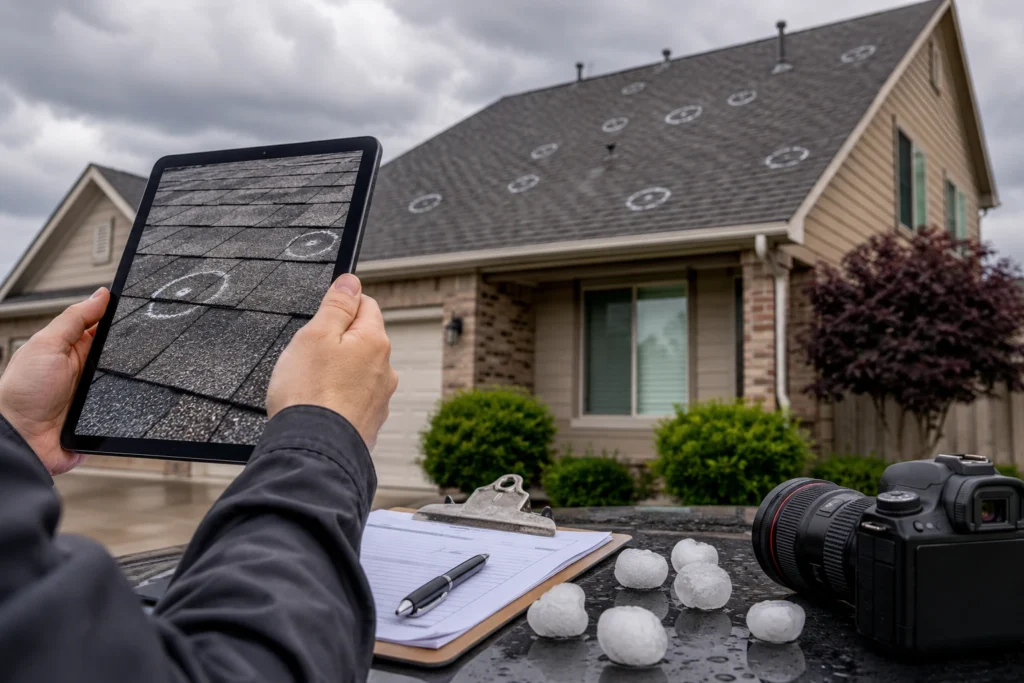
A hailstorm can last only a few minutes. The insurance claim that follows can take weeks or even months. That’s why understanding How to Document Hail Damage for an Insurance Claim is one of the most important steps a property owner can take after a storm. Documentation often becomes the foundation of the entire claim. The more organized and thorough your evidence is, the easier it becomes to demonstrate the full extent of the damage.
Many homeowners assume visible roof damage alone is enough. Unfortunately, that’s not always the case. Insurance companies evaluate claims based on evidence. Photos, videos, inspection reports, weather data, receipts, and written records all play a role in determining what is covered and how much compensation may be available. The good news? You don’t need to be an insurance expert to build a strong documentation file. In this guide, we’ll walk through the exact steps homeowners can take to properly document hail damage, preserve evidence, and create a claim package that supports a fair review.
Why Proper Documentation Matters for a Hail Damage Insurance Claim
Documentation is more than paperwork. It’s proof. When a claim is submitted, insurance carriers need evidence that damage occurred, evidence that it resulted from a covered event, and evidence of the associated repair costs. Without documentation, important details can easily be overlooked.
Insurance Companies Rely on Evidence
Insurance adjusters investigate facts. They examine photographs. They review inspection reports. They compare damage against policy language. A homeowner may know their roof was damaged during a storm, but proving that damage requires documentation. The stronger the evidence, the easier it becomes to support the claim.
The Cost of Poor Documentation
Incomplete records can create problems throughout the claims process.
Potential consequences include:
- Delayed claim processing
- Disputed damage scope
- Reduced settlement amounts
- Supplemental claim challenges
- Claim denials due to insufficient evidence
Many homeowners don’t realize damage can worsen over time. Missing the opportunity to document conditions immediately after the storm may make it harder to establish when the damage actually occurred.
Documentation Creates Leverage
A well-documented claim gives homeowners something valuable: credibility. Instead of relying on verbal descriptions, they can provide clear visual and written evidence. That evidence often becomes critical when discussing repairs, supplements, or disputed damage items.
For many homeowners, a Hail Damage Roof Insurance Claim represents one of the largest property-related insurance filings they may ever submit. Because roof replacement costs can be substantial, thorough documentation becomes critical. Detailed photographs, inspection reports, weather records, and repair estimates help create a stronger foundation for the claim and can reduce the likelihood of disputes regarding the extent of the damage.
What To Do Immediately After a Hailstorm
The actions taken during the first few hours after a hail event can significantly affect the claim process. However, safety should always come first.
Prioritize Safety First
Never rush onto a roof after a storm. Even experienced contractors exercise caution when inspecting storm-damaged roofing systems.
Potential hazards include:
- Slippery surfaces
- Structural instability
- Fallen power lines
- Damaged tree limbs
- Hidden roof punctures
Document what you can safely observe from the ground first.
Record the Date and Time of the Storm
This sounds simple. It’s surprisingly important.
Create a record that includes:
| Information | Details to Record |
| Date | Exact storm date |
| Time | Approximate start and end time |
| Weather Conditions | Hail size, wind, rainfall |
| Observations | Visible damage noticed immediately |
This timeline can later be matched with weather reports and hail tracking data.
Prevent Additional Damage
Insurance policies generally expect homeowners to take reasonable steps to prevent further property damage.
Examples include:
- Installing temporary tarps
- Covering broken windows
- Removing standing water
- Protecting exposed belongings
Keep every receipt associated with emergency repairs. Those expenses may become part of the claim.
Step 1 – Take Wide-Angle Photos of the Entire Property
One of the biggest documentation mistakes homeowners make is focusing only on obvious damage. Context matters. Insurance carriers need to understand the overall condition of the property.
Why Context Matters
Wide-angle photographs help establish:
- Property condition immediately after the storm
- Areas affected by hail
- Overall scope of damage
- Relationships between damaged components
Think of these photos as the opening chapter of your claim story.
Areas to Photograph
Capture images of:
- Front elevation
- Rear elevation
- Left side elevation
- Right side elevation
- Detached garages
- Storage buildings
- Fencing
- Outdoor equipment
- Roofing visible from the ground
Take more photos than you think you’ll need. Storage is cheap. Missing evidence can be expensive.
Best Practices for Property Overview Photos
For best results:
- Use daylight whenever possible
- Take photos from multiple angles
- Capture both landscape and portrait orientations
- Avoid digital zoom when possible
- Ensure photos remain high resolution
The goal is clarity. Every image should help tell the story of the damage.
Step 2 – Capture Detailed Close-Up Evidence of Hail Damage
After documenting the overall property condition, focus on specific damage indicators. This is where many claims gain strength.
Roof Damage Indicators
Hail affects roofing materials differently depending on age, material type, and impact severity.
Common signs include:
- Bruised shingles
- Circular impact marks
- Granule loss
- Cracked shingles
- Fractured tile surfaces
- Exposed asphalt matting
Take multiple close-up photos of each damaged area. One image rarely tells the complete story.
Metal Surface Damage
Metal components often provide some of the clearest evidence of hail impact.
Inspect:
- Gutters
- Downspouts
- Roof vents
- Flashings
- Metal roof panels
- Air conditioning units
Dents in metal surfaces can help demonstrate storm severity and support roof damage findings.
Siding and Exterior Damage
Don’t stop at the roof.
Hail frequently damages:
- Vinyl siding
- Fiber cement siding
- Window frames
- Garage doors
- Exterior lighting
- Deck surfaces
Photograph all visible impact marks. Small dents today can become important evidence later.
Use Scale References
One technique professionals frequently use is adding a size reference to photos.
Helpful reference tools include:
- Measuring tape
- Ruler
- Coin
- Marker
A reference object allows viewers to understand the size of hail impacts more accurately. That additional context can strengthen documentation significantly.
Step 3 – Record Video Evidence
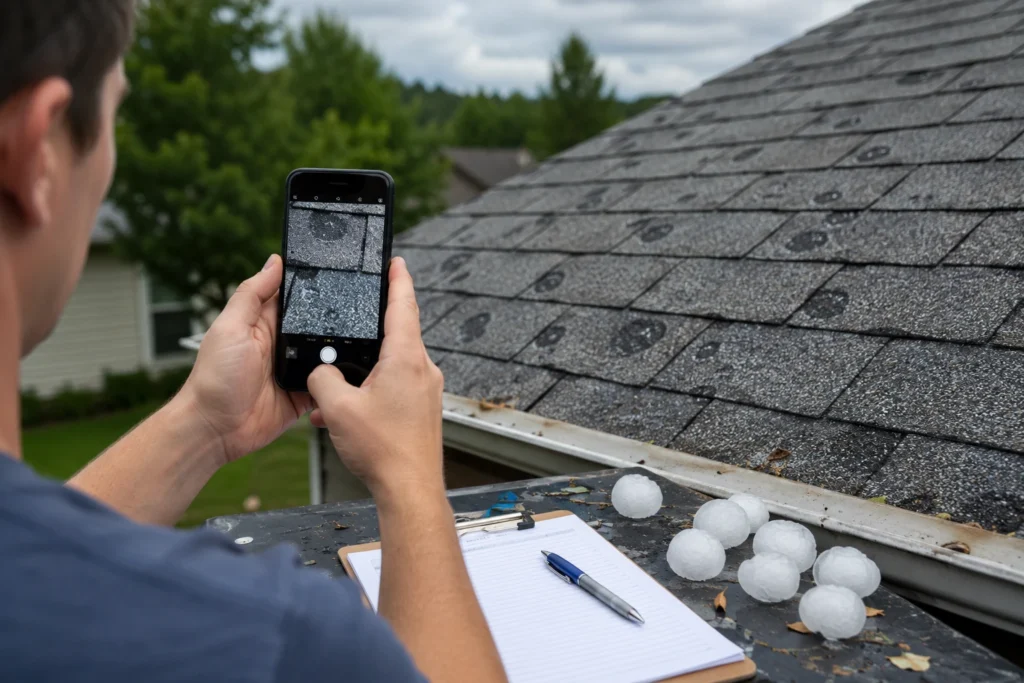
Photos are powerful. Videos add another layer.Conducting a Walkaround Video They provide movement, perspective, and context that still images sometimes miss.
Why Video Can Reveal What Photos Miss
Video footage allows you to:
- Show damage relationships
- Demonstrate property layout
- Highlight multiple damaged areas
- Narrate observations in real time
Sometimes a 60-second walkthrough can communicate more than dozens of photographs.
Conducting a Walkaround Video
Start outside. Move slowly around the property.
As you record:
- Describe visible damage
- Mention locations
- Reference dates
- Point out affected structures
Avoid rushing. Slow, deliberate recordings are easier to review later.
Capture Active Water Intrusion
If hail damage results in leaks, document them immediately.
Record:
- Dripping water
- Ceiling stains
- Wet insulation
- Damaged drywall
- Moisture accumulation
These conditions can change quickly. Video creates a time-stamped record that may become extremely valuable later.
Step 4 – Document Interior Signs of Hail-Related Damage
Many homeowners focus entirely on the exterior. That’s understandable. The roof is where hail strikes first. However, interior damage often drives claim value.
Areas Most Commonly Affected
Inspect:
- Attics
- Ceilings
- Walls
- Closets
- Utility rooms
Pay special attention to areas beneath roof penetrations and valleys. Leaks often appear there first.
Water Intrusion Indicators
Look for:
- Yellow stains
- Brown discoloration
- Peeling paint
- Warped materials
- Bubbling drywall
- Soft spots
Photograph every issue individually. Then take wider photos showing where the damage is located within the room.
Hidden Damage Often Appears Later
Some damage develops gradually.
Examples include:
- Mold growth
- Damp insulation
- Structural wood deterioration
- Ceiling sagging
This is one reason proper documentation matters so much. A claim may begin with visible hail impacts but expand as hidden damage becomes apparent.
Step 5 – Create a Detailed Damage Inventory
Photographs are essential. Written documentation is equally important. The best claims combine both.
Why Written Records Matter
A written inventory helps organize information and ensures important details aren’t forgotten. It also provides adjusters with a structured summary of damage observations. Think of it as the roadmap accompanying your visual evidence.
Building a Room-by-Room Inventory
Create a simple spreadsheet or notebook record.
Include:
| Area | Damage Description | Severity |
| Roof | Granule loss and impact marks | Moderate |
| Living Room | Ceiling water stain | Minor |
| Garage | Dented metal door panels | Moderate |
| Fence | Impact damage and splitting | Minor |
Consistency matters more than complexity. A simple, organized inventory can be incredibly effective.
Exterior Inventory Checklist
Document:
- Roofing
- Gutters
- Downspouts
- Siding
- Windows
- Screens
- HVAC units
- Fencing
- Outdoor structures
The more complete the inventory, the stronger the overall claim file becomes. For homeowners researching How to Document Hail Damage for an Insurance Claim, this inventory process is often one of the most overlooked yet valuable steps. In areas like New Braunfels, where severe storms can affect entire neighborhoods simultaneously, detailed inventories help distinguish your property’s specific damages from broader community storm impacts.
Step 6 – Gather Supporting Documentation
Photos and videos provide visual proof. Supporting documents provide context. Together, they create a much stronger claim package. If you’re serious about learning How to Document Hail Damage for an Insurance Claim, gathering supporting records should be a priority. These documents help establish property condition, maintenance history, and the connection between the storm and the resulting damage.
Important Documents to Collect
Start by gathering documents that relate to the affected property.
Examples include:
- Insurance policy declarations page
- Full insurance policy
- Previous roof inspection reports
- Home inspection reports
- Roofing warranties
- Repair invoices
- Maintenance records
- Property appraisal reports
These records can help demonstrate that the property was maintained before the storm occurred. That distinction can become important if questions arise about pre-existing conditions.
Weather Reports and Storm Verification
Weather data often plays a major role in hail claims. Insurance companies frequently verify whether a hail event occurred in the area and evaluate reported hail sizes.
Helpful sources may include:
- National Weather Service reports
- Local weather stations
- Hail tracking services
- Storm event databases
If reports indicate hail ranging from one inch to two inches in diameter and your property shows corresponding impact damage, that information can strengthen the claim. Documentation should support the story from multiple angles. Weather reports are one piece of that puzzle.
Contractor Inspection Reports
Independent inspections can provide additional insight. Professional roofing contractors often identify damage that homeowners may overlook.
Inspection reports may include:
- Roof condition assessments
- Photographs
- Damage maps
- Repair recommendations
- Estimated replacement costs
While contractors are not claim decision-makers, their documentation can become valuable supporting evidence.
Step 7 – Keep Every Receipt and Expense Record
Many homeowners focus entirely on physical damage. That’s understandable. However, storm-related expenses may also be relevant to the claim.
Temporary Repairs
Emergency mitigation is often necessary to prevent further damage.
Examples include:
- Roof tarping
- Temporary patching
- Board-up services
- Water extraction
- Debris removal
Save every receipt. Every invoice. Every estimate. Even relatively small expenses can add up quickly.
Additional Living Expenses
If hail damage contributes to conditions that make the home temporarily uninhabitable, certain policies may provide coverage for additional living expenses.
Potential expenses include:
- Hotel stays
- Short-term rentals
- Meals
- Laundry services
- Transportation costs
Coverage varies by policy, but documentation remains essential. No receipt often means no proof.
Why Expense Records Matter
Insurance claims are evidence-based processes. Expenses without documentation can be difficult to verify. Maintaining organized financial records helps create a complete picture of the losses associated with the storm.
Organizing Your Hail Damage Claim File
Documentation becomes far more effective when it is organized. A pile of random photographs, scattered receipts, and buried emails can quickly become overwhelming. The most successful claim files are structured and easy to navigate. Effective claim organization often depends on creating a structured system for storing evidence. In many ways, this resembles the concept of Taxonomy (general), which involves classifying and organizing information into logical categories so it can be easily located and reviewed later.
Create Digital and Physical Copies
Technology makes documentation easier than ever. Still, backups remain important.
Consider maintaining:
- Cloud storage copies
- External hard drive backups
- Printed documents
- USB drive archives
Redundancy protects valuable information. Losing documentation during the claims process can create unnecessary complications.
Recommended Folder Structure
A simple filing system can save hours later. Consider organizing files into folders such as:
| Folder | Contents |
| Photos | Exterior and interior images |
| Videos | Walkthrough recordings |
| Weather Reports | Storm verification data |
| Receipts | Mitigation and repair expenses |
| Communications | Emails and letters |
| Estimates | Contractor proposals |
| Policy Documents | Insurance information |
This structure allows quick access whenever questions arise.
Naming Files Correctly
Many homeowners overlook file naming. That can create problems when hundreds of photos accumulate.
A simple naming format works well:
- Roof-Damage-FrontSlope-06-15-2026
- LivingRoom-Leak-06-15-2026
- Garage-Gutter-Dents-06-15-2026
Clear naming conventions make evidence easier to locate and review.
How To Communicate With Your Insurance Company
Documentation extends beyond physical damage. Communication records matter too. In some claims, communication logs become just as important as photographs.
Maintain a Claim Log
Every interaction should be documented.
Track:
- Phone calls
- Emails
- Inspections
- Meetings
- Voicemails
A claim log provides a timeline of events and conversations.
Information to Record
For each interaction, note:
- Date
- Time
- Representative name
- Contact information
- Discussion summary
- Follow-up commitments
A simple notebook can work. A spreadsheet works even better.
Why Communication Records Matter
Claim files often involve multiple representatives over time. People change roles. Adjusters rotate assignments. Details can get lost. A communication log helps ensure important information remains documented and accessible. If questions arise later, you’ll have a clear record of what was discussed and when.
Common Documentation Mistakes That Hurt Hail Claims
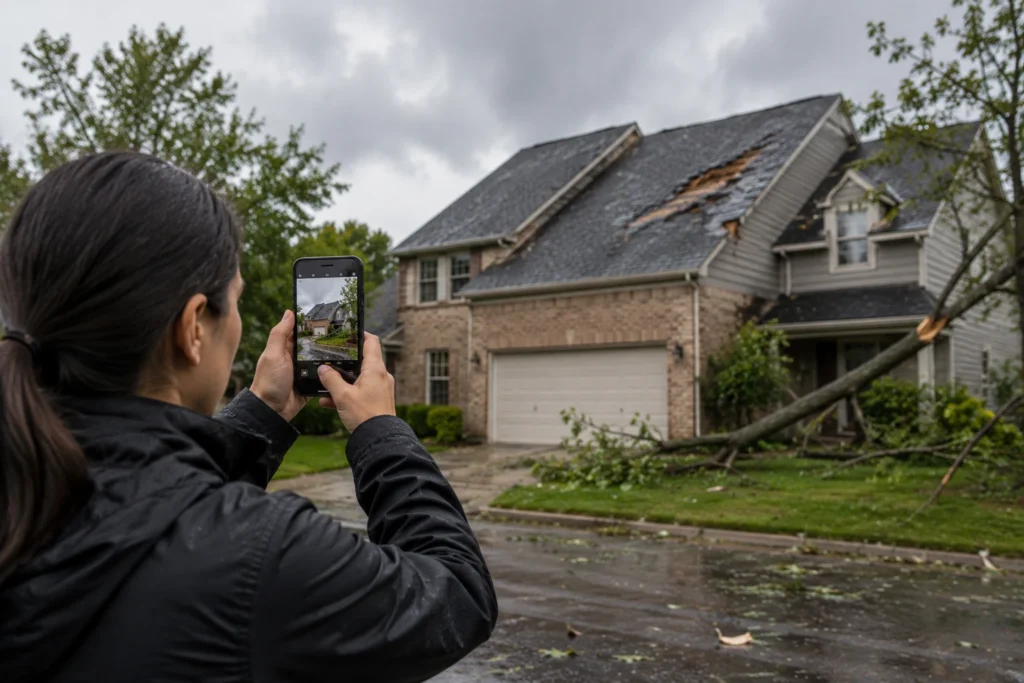
Even well-intentioned homeowners can make mistakes that weaken otherwise valid claims. Recognizing these issues early can help avoid unnecessary challenges.
Waiting Too Long to Take Photos
Time is not your friend after a hailstorm. Conditions change. Repairs occur. Evidence disappears. Photographs taken immediately after the event generally provide the strongest support.
Throwing Away Damaged Materials
Damaged materials can sometimes serve as valuable evidence.
Examples include:
- Broken shingles
- Damaged vents
- Cracked siding pieces
- Impacted screens
When possible, retain damaged items until claim inspections are completed.
Failing to Document Temporary Repairs
Emergency repairs are often necessary. However, many homeowners forget to photograph conditions before repairs begin.
Always document:
- Original damage
- Repair process
- Completed temporary work
These records help establish why mitigation was necessary.
Missing Interior Damage
Exterior impacts receive most of the attention. Interior consequences often receive less. That’s a mistake. Water intrusion, staining, insulation damage, and structural concerns should all be documented carefully.
Relying on Memory Instead of Written Records
Storm claims can stretch over months. Memories fade. Documentation lasts. Written notes, logs, inventories, and records provide consistency throughout the process.
Providing Incomplete Evidence Packages
Strong claims are built on complete documentation. Not partial documentation. Not selective documentation. Comprehensive evidence creates a clearer picture and reduces uncertainty during claim review.
How a Public Adjuster Can Strengthen Claim Documentation
Many homeowners begin researching documentation before deciding whether to seek professional assistance. That’s smart. Understanding the process helps property owners make informed decisions.
Professional Inspection Techniques
Public adjusters often use systematic inspection methods designed to identify damage throughout the property.
This may include:
- Roofing assessments
- Exterior inspections
- Interior evaluations
- Moisture investigations
- Documentation reviews
The goal is to identify all covered damage, not just the most obvious issues.
Building a More Comprehensive Claim File
Documentation is a skill. Experience matters.
Public adjusters typically understand:
- What evidence supports claims
- What insurers commonly request
- How damage should be organized
- Which supporting records are most persuasive
This can help create a more complete submission package.
Supporting Claim Negotiations
Negotiations are strongest when supported by evidence. Not assumptions. Not opinions. Evidence. Detailed photographs, inventories, inspection findings, estimates, and records provide a factual foundation for claim discussions.
Why Homeowners Often Seek Documentation Assistance
Severe hailstorms can produce complex losses. Roofing systems contain numerous components. Exterior damage can affect multiple building materials. Interior damage may emerge weeks later. For homeowners in New Braunfels, navigating these issues often requires careful attention to detail. Proper documentation helps ensure storm-related damage receives the consideration it deserves during the claims process.
Hail Damage Documentation Checklist
Before submitting a claim, review this checklist.
Exterior Documentation
✔ Wide-angle property photos
✔ Roof damage photographs
✔ Gutter and downspout photos
✔ Siding damage documentation
✔ Window and screen damage photos
✔ HVAC equipment documentation
✔ Fence and detached structure photos
Interior Documentation
✔ Ceiling stains
✔ Water intrusion
✔ Damaged drywall
✔ Insulation concerns
✔ Flooring damage
✔ Mold indicators
Administrative Documentation
✔ Insurance policy
✔ Weather reports
✔ Contractor inspections
✔ Repair estimates
✔ Receipts
✔ Expense records
✔ Communication log
Claim Submission Package
✔ Organized photos
✔ Organized videos
✔ Damage inventory
✔ Supporting documents
✔ Estimates
✔ Expense documentation
✔ Communication records
Completing this checklist helps ensure that critical information is not overlooked.
Conclusion
A hailstorm may pass quickly, but the insurance claim process often unfolds over much longer periods. That’s why understanding How to Document Hail Damage for an Insurance Claim is so important. Strong documentation helps establish what happened, when it happened, and how extensively the property was affected. The most successful claims are rarely built on a single photograph or inspection. Instead, they rely on a collection of evidence working together photos, videos, inventories, weather records, receipts, contractor reports, and communication logs.
If there’s one takeaway from this guide, it’s this: document early, document thoroughly, and stay organized. Every photograph matters. Every receipt matters. Every note matters. For property owners in New Braunfels, taking these steps after a hailstorm can help create a clearer, stronger claim file and reduce many of the challenges that often arise during the insurance review process. When the evidence is organized and complete, homeowners place themselves in a far better position to pursue a fair and accurate claim outcome.
FAQs
You should begin documenting damage as soon as it is safe to do so. Early documentation helps preserve evidence before conditions change.
Take wide-angle photos of the entire property and close-up images of damaged areas, including the roof, gutters, siding, windows, and HVAC equipment.
Yes, but professional inspection reports can provide additional evidence and may help support the extent of the documented damage.
Absolutely. Videos provide context and can capture property conditions and damage relationships that photos sometimes miss.
Document the damage immediately and keep records showing when it was discovered. Hidden damage often becomes visible after water intrusion develops.
Weather reports are not always required, but they can help verify storm activity and strengthen your documentation package.
Receipts may support reimbursement requests for emergency mitigation expenses and help demonstrate efforts to prevent further damage.
Yes. Impact marks on gutters, siding, and other exterior components can provide supporting evidence of hail activity at the property.
Create separate folders for photos, videos, receipts, reports, estimates, and communications so information is easy to locate and review.
If your claim is large, complex, disputed, underpaid, or denied, a public adjuster may help evaluate damage and strengthen claim documentation.