
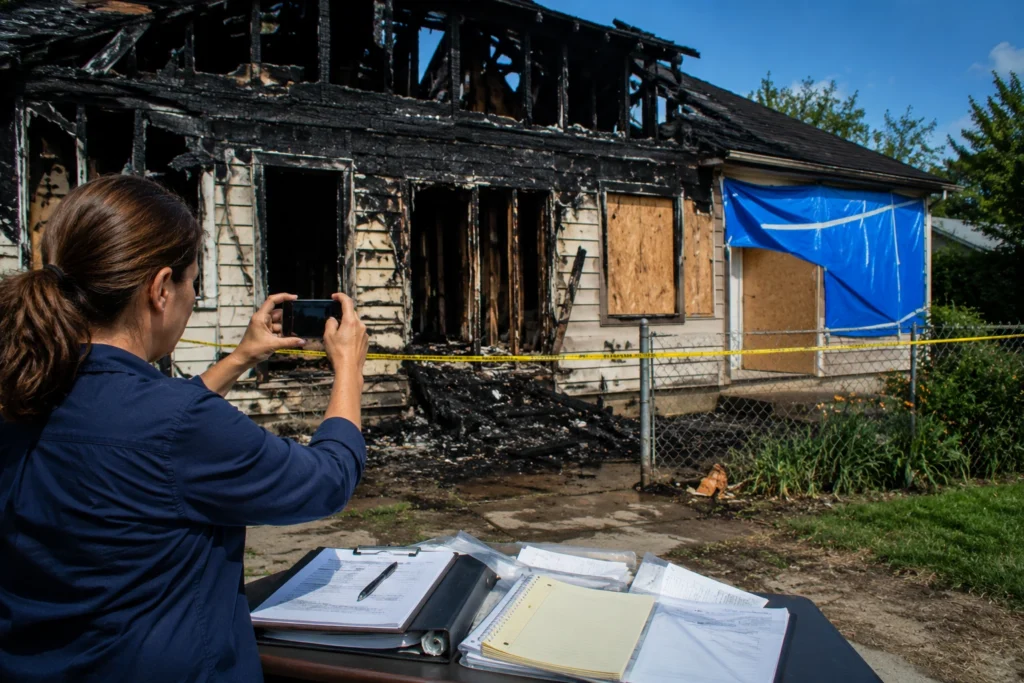
A fire can change everything in a matter of minutes. One moment, life feels normal. The next, you’re standing outside your home watching firefighters battle flames while wondering what happens next. The emotional toll is enormous. Then comes the financial reality. Repairing or rebuilding a property after a fire can cost tens or even hundreds of thousands of dollars. This is where a fire insurance adjuster becomes an important part of the recovery process. Many property owners assume that filing an insurance claim is straightforward. Unfortunately, fire losses are rarely simple. Damage often extends beyond what is immediately visible. Smoke travels. Soot settles into hidden spaces. Water used to extinguish the fire can create additional problems. As a result, accurately documenting and valuing the loss requires expertise and attention to detail.
For homeowners and business owners in New Braunfels, understanding how fire claims work can help protect your financial recovery. Whether the damage involves a single room or an entire structure, knowing the role of a fire insurance adjuster can make a significant difference in the outcome of your claim. Let’s break down what you need to know.
What Is a Fire Insurance Adjuster?
A fire insurance adjuster is a professional who evaluates property damage resulting from a fire and helps determine the value of an insurance claim.
Their responsibilities often include:
- Inspecting damaged property
- Documenting losses
- Reviewing policy coverage
- Estimating repair or replacement costs
- Analyzing smoke and soot damage
- Assessing personal property losses
- Supporting claim settlement discussions
At first glance, that may sound simple. In reality, fire claims are among the most complex property insurance claims. A thorough evaluation requires far more than walking through a damaged building and taking photographs. A skilled fire insurance adjuster understands how fire affects building materials, electrical systems, insulation, roofing components, HVAC equipment, and personal belongings. They also understand how insurance policies apply to those losses. That combination of technical knowledge and policy interpretation is what makes their role so valuable.
Why Fire Claims Are Different From Other Property Claims
Not all property damage claims are created equal. A broken pipe might affect one room. A hailstorm may damage a roof. Fire losses, however, often impact multiple systems throughout a property simultaneously.
Consider what can happen during a typical house fire:
| Type of Damage | Potential Impact |
| Fire Damage | Structural destruction, weakened framing |
| Smoke Damage | Odors, contamination, staining |
| Soot Damage | Surface deterioration, HVAC contamination |
| Water Damage | Mold growth, material deterioration |
| Heat Damage | Warped materials, damaged electronics |
The visible damage is often only part of the story. For example, smoke can travel through ductwork and contaminate rooms that never experienced direct flames. Electronics may appear functional but suffer internal heat-related damage. Insulation hidden behind walls can absorb smoke odors that linger for years if not properly addressed.
During complex fire investigations and restoration projects, professionals often rely on highly detailed assessment methods to identify hidden damage. In many technical fields, this level of systematic analysis resembles the concept of Morphogenesis, which examines how complex structures develop and evolve over time. Similarly, fire damage assessment requires experts to evaluate how heat, smoke, soot, and water interact throughout a property before determining the full scope of repairs. Because of these factors, fire claims frequently require detailed investigations.
Types of Fire Insurance Adjusters
Many property owners are surprised to learn that there are different types of adjusters involved in the claims process. Understanding the distinction matters.
Company Adjusters
Company adjusters work directly for insurance carriers.
Their responsibilities include:
- Investigating claims
- Evaluating damage
- Reviewing coverage
- Preparing settlement recommendations
They represent the insurance company throughout the process. That does not mean they are dishonest or unfair. However, their role is ultimately tied to the carrier that employs them.
Independent Adjusters
Independent adjusters are not employees of insurance companies. Instead, they work as contractors hired by insurers when claim volumes increase or when specialized expertise is needed. After major disasters, insurance carriers often deploy independent adjusters to handle large numbers of claims. Although they operate independently, they still work on behalf of the insurance company.
Public Fire Insurance Adjusters
Public adjusters represent policyholders rather than insurance carriers. Their primary goal is helping property owners document losses and pursue fair claim settlements.
Services may include:
- Preparing damage inventories
- Reviewing policy provisions
- Developing repair estimates
- Organizing claim documentation
- Negotiating claim values
For large fire losses, many homeowners choose public adjusters because they want professional representation focused exclusively on their interests.
The Fire Insurance Claim Process Step by Step
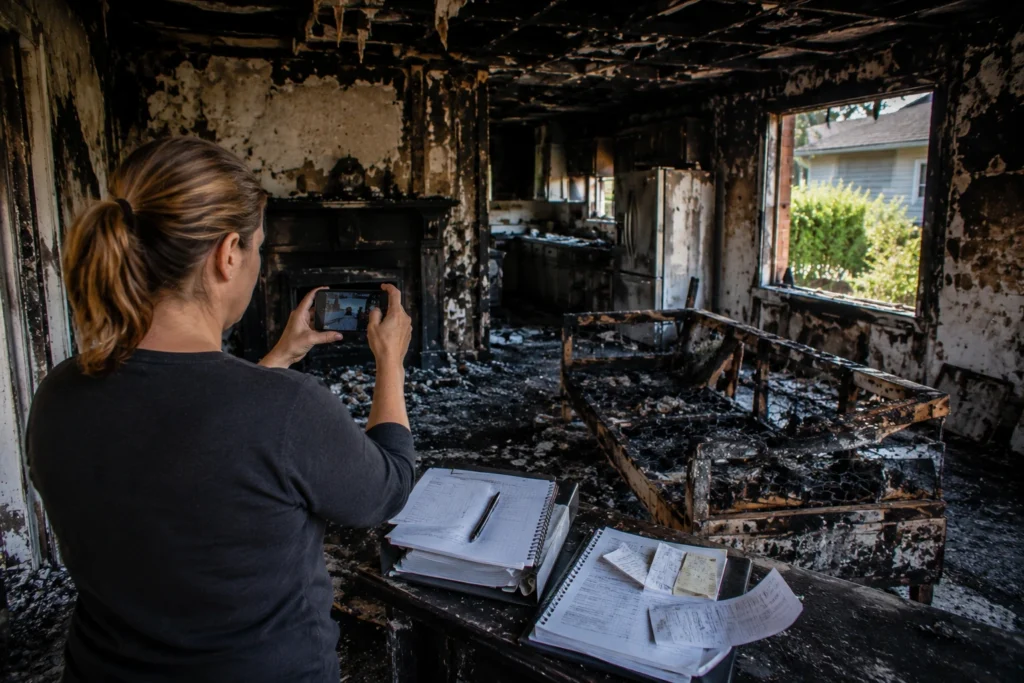
The claims process begins long before settlement discussions occur. Understanding each stage can help property owners avoid costly mistakes.
Immediate Actions After the Fire
Safety always comes first. Once emergency responders determine that the property is safe to access, homeowners should begin documenting conditions as quickly as possible.
Important initial steps include:
- Contact your insurance carrier
- Obtain a copy of the fire report
- Photograph visible damage
- Prevent further damage if safe
- Keep receipts for emergency expenses
- Create a claim file for records
Many people understandably focus on cleanup. However, rushing to remove damaged items can create problems later. Whenever possible, document everything before disposal. Photographs, videos, receipts, and written notes often become critical evidence during the claim process.
Securing the Property
After a fire, protecting the property from further damage becomes essential.
This may involve:
- Boarding windows
- Installing temporary fencing
- Covering roof openings
- Securing entrances
Insurance policies generally require property owners to take reasonable steps to mitigate additional damage. Failing to do so could create unnecessary claim complications.
Filing the Claim
The next step involves formally reporting the loss.
During this stage, homeowners typically provide:
- Policy information
- Date of loss
- Description of damages
- Emergency contact details
- Initial photographs
The insurance company will then assign an adjuster to investigate the claim. This marks the beginning of the formal evaluation process.
Damage Assessment
Damage assessment is often the longest and most important phase. A fire insurance adjuster will typically inspect:
Structural Components
The inspection may include:
- Roof systems
- Attic spaces
- Exterior walls
- Interior framing
- Foundations
- Flooring systems
Even when damage appears isolated, heat can compromise structural integrity in surrounding areas.
Smoke and Soot Evaluation
Smoke damage extends far beyond visible stains.
Inspectors often evaluate:
- HVAC systems
- Air ducts
- Insulation
- Cabinets
- Furnishings
- Electronics
Smoke particles can penetrate porous materials and remain trapped long after cleanup efforts begin. Without proper remediation, odors may persist indefinitely.
Water Damage Assessment
Firefighting efforts frequently introduce significant water damage.
Inspectors may examine:
- Moisture levels
- Drywall conditions
- Flooring materials
- Mold risks
- Insulation saturation
Water damage can become one of the most expensive aspects of a fire loss if not addressed quickly.
Personal Property Evaluation
Many homeowners underestimate the complexity of contents claims.
A thorough inventory may include:
- Furniture
- Clothing
- Appliances
- Electronics
- Jewelry
- Collectibles
- Tools
- Sporting equipment
Each item may require:
- Description
- Age
- Condition
- Original cost
- Replacement value
For larger claims, creating a complete inventory can take weeks.
What a Fire Insurance Adjuster Looks for During an Inspection
A professional inspection involves much more than identifying burned materials. Experienced adjusters evaluate both obvious and hidden damage.
Structural Damage
Heat can affect structural components even when flames never directly touch them.
Inspectors often look for:
- Warped framing
- Compromised roof decking
- Cracked masonry
- Damaged support members
- Structural movement
Seemingly minor issues can create major repair costs later.
Smoke and Soot Damage
Smoke behaves unpredictably. Depending on ventilation patterns, contamination may spread throughout the structure.
Adjusters evaluate:
- Ceiling discoloration
- Wall staining
- Vent contamination
- Odor penetration
- Residue accumulation
Even areas untouched by flames may require extensive cleaning or replacement.
Electrical System Damage
Electrical systems deserve special attention.
Heat exposure can damage:
- Wiring
- Panels
- Circuit breakers
- Outlets
- Fixtures
These problems are not always visible during initial inspections. Specialized testing may be necessary to identify hidden hazards.
HVAC Contamination
HVAC systems often act like giant distribution networks for smoke particles. If contamination enters the system, it may spread throughout the building.
Inspection areas may include:
- Ductwork
- Air handlers
- Filters
- Registers
- Mechanical components
Failure to address HVAC contamination can result in recurring odor problems long after repairs appear complete.
Common Challenges in Fire Insurance Claims
Even straightforward claims can encounter obstacles. Fire claims frequently involve additional complications.
Hidden Damage Gets Overlooked
Some forms of damage are easy to miss.
Examples include:
- Smoke inside wall cavities
- Heat-damaged wiring
- Contaminated insulation
- Hidden moisture intrusion
When these issues remain undiscovered, settlement amounts may fall short of actual repair costs.
Contents Claims Become Complicated
Many homeowners struggle with inventory preparation. Consider the challenge. Could you list every item in your home right now? Probably not. Yet insurance companies often require detailed documentation for damaged contents. Missing information can affect reimbursement amounts.
Claim Delays
Large losses naturally take longer to evaluate.
Delays may result from:
- Multiple inspections
- Engineering reports
- Contractor availability
- Documentation requests
- Coverage reviews
While some delays are unavoidable, proactive documentation can help keep the process moving.
Coverage Disputes
Policy language sometimes creates disagreements regarding:
- Scope of damage
- Repair methods
- Replacement requirements
- Additional living expenses
- Code upgrade costs
These disputes often require extensive supporting documentation to resolve.
How a Public Fire Insurance Adjuster Helps Maximize Recovery
After a fire, many property owners quickly realize they are juggling several responsibilities at once. They are dealing with temporary housing, family concerns, contractors, cleanup companies, and insurance paperwork. It becomes overwhelming fast. This is where a public fire insurance adjuster can provide substantial value. Rather than simply reviewing damage, a public adjuster helps manage the entire claim process from start to finish.
Detailed Documentation
Documentation often determines the strength of a fire claim. Insurance companies rely heavily on evidence. The more organized and comprehensive that evidence is, the stronger the claim becomes.
A public adjuster may assist by:
- Creating detailed damage inventories
- Photographing all affected areas
- Identifying hidden damage
- Collecting contractor reports
- Reviewing restoration estimates
- Organizing claim records
For example, smoke contamination may not be obvious in every room. However, laboratory testing, professional inspections, and expert reports may reveal conditions requiring remediation. Without proper documentation, those costs could be overlooked.
Accurate Estimating
Repair estimates are rarely as simple as replacing damaged drywall or repainting walls.
A complete fire-loss estimate may include:
- Demolition costs
- Debris removal
- Smoke remediation
- HVAC cleaning
- Structural repairs
- Electrical replacement
- Code-required upgrades
- Finish restoration
Missing just a few items can create a significant gap between actual rebuilding costs and insurance payments. Experienced public adjusters focus on identifying the full scope of damage rather than only the most visible issues.
How Do Public Adjusters Work?
Many homeowners ask, “How Do Public Adjusters Work?” The process typically begins with a detailed review of the fire damage and the insurance policy. A public adjuster documents losses, prepares estimates, organizes supporting evidence, and communicates directly with the insurance company throughout the claim. Their goal is to help policyholders present a well-supported claim, identify overlooked damages, and negotiate a settlement that accurately reflects the full scope of the loss. For property owners recovering from a fire, this professional guidance can provide both clarity and valuable support during a challenging time.
Negotiating With the Insurance Company
Negotiation is another critical component of large fire claims. Many homeowners assume the first settlement offer represents the final value of the claim. That is not always the case. When additional evidence supports a higher valuation, negotiations may lead to revised settlement amounts.
Effective negotiation often involves:
- Detailed repair estimates
- Expert opinions
- Supporting documentation
- Policy interpretation
- Supplemental claim submissions
Facts matter. Documentation matters. Organization matters. The strongest claims are usually built on evidence rather than emotion.
Managing the Entire Process
Perhaps the biggest benefit is reducing stress. After a fire, homeowners already have enough to handle. Managing inspections, phone calls, estimates, emails, and claim paperwork can quickly become a full-time job. A public fire insurance adjuster helps coordinate these moving parts while allowing property owners to focus on recovery.
Fire Insurance Adjuster vs Contractor
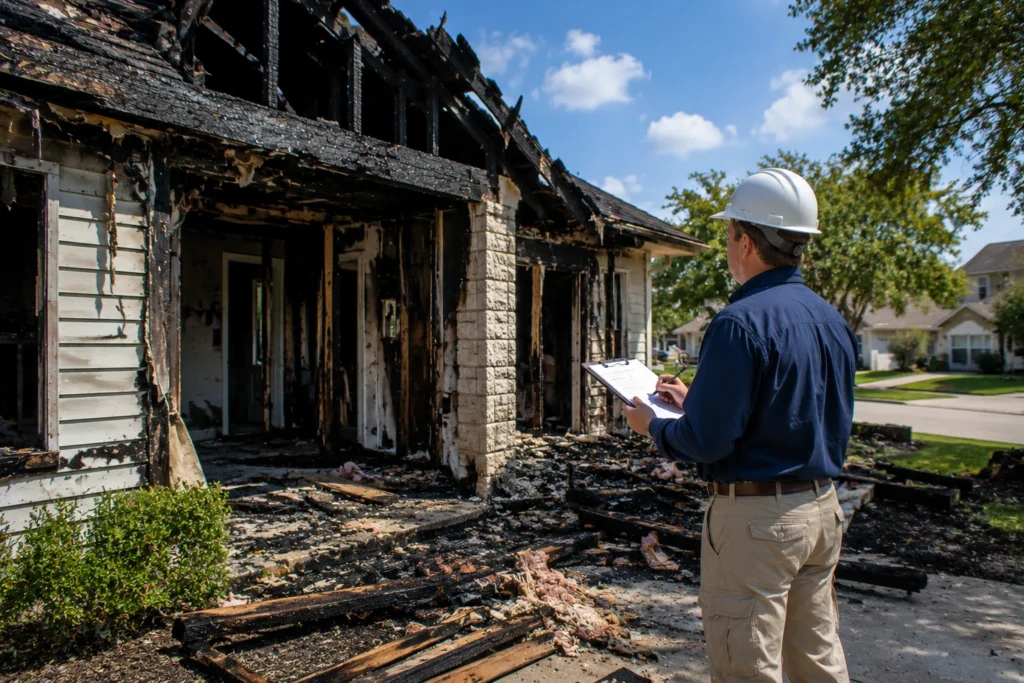
One common misunderstanding involves the roles of contractors and adjusters. Although both may inspect damage, their responsibilities differ significantly.
| Fire Insurance Adjuster | Contractor |
| Evaluates claim damage | Performs repairs |
| Reviews policy-related losses | Focuses on construction work |
| Assists with claim documentation | Provides repair estimates |
| Negotiates claim values | Completes rebuilding projects |
| Supports claim settlement process | Restores damaged property |
Both professionals serve important purposes. A contractor understands construction. A fire insurance adjuster understands claims. The most successful recoveries often involve cooperation between both parties.
Why Both Professionals Matter
Imagine a contractor discovers additional damage during demolition. Perhaps smoke contamination extends farther than initially expected. Maybe hidden framing damage becomes visible. Those findings may support a supplemental claim request. In situations like these, contractors and adjusters can work together to ensure newly discovered damage is properly documented and submitted.
Fire Insurance Adjuster vs Attorney
Homeowners frequently ask whether they need an attorney after a fire loss. The answer depends on the situation.
When an Adjuster May Be the Better First Step
Many fire claims involve disagreements regarding:
- Scope of damage
- Repair costs
- Contents valuation
- Smoke remediation requirements
These issues can often be resolved through documentation, negotiation, and claim management. In those circumstances, a public adjuster may be the most practical starting point.
When Legal Representation Becomes Necessary
Some situations are more serious.
Examples include:
- Claim denials
- Bad-faith allegations
- Coverage litigation
- Contract disputes
- Lawsuits
When legal questions arise, an attorney may become necessary. The key takeaway is simple. Adjusters handle claims. Attorneys handle legal disputes. The two professions serve different purposes, although they sometimes work together on complex cases.
Mistakes Homeowners Should Avoid After a Fire
Even strong insurance policies can produce disappointing outcomes when mistakes occur during the claims process. Fortunately, most common errors can be avoided.
Throwing Away Damaged Property Too Soon
Many homeowners want to clean up immediately. That’s understandable. However, damaged items often serve as evidence. Discarding them before documentation may create challenges when proving losses.
Whenever possible:
- Photograph items first
- Create inventory lists
- Obtain approval before disposal
- Keep records of removed materials
Accepting the First Settlement Offer Immediately
Some initial estimates are accurate. Others may require additional review.
Before accepting a settlement:
- Review the scope carefully
- Compare contractor estimates
- Verify contents inventories
- Confirm smoke remediation requirements
A rushed decision can become difficult to reverse later.
Failing to Document Smoke Damage
Smoke is one of the most underestimated aspects of fire claims. Visible flames attract attention. Smoke often causes long-term problems.
Take photographs of:
- Wall staining
- Ceiling discoloration
- HVAC contamination
- Damaged contents
- Soot accumulation
The more evidence available, the easier it becomes to support remediation requirements.
Missing Important Deadlines
Insurance claims involve deadlines.
These may include:
- Proof-of-loss submissions
- Documentation requests
- Appeal periods
- Supplemental claim deadlines
Keeping organized records helps avoid unnecessary complications.
Relying Exclusively on One Inspection
Large fire losses sometimes require multiple evaluations. Contractors, engineers, restoration specialists, and adjusters may each identify different issues. Additional inspections often uncover damage that was not initially visible.
Why Local Experience Matters in New Braunfels Fire Claims
Every region has unique factors that influence rebuilding costs and insurance claims. This is especially true in New Braunfels. Local knowledge can provide meaningful advantages throughout the claims process.
Understanding Local Construction Costs
Labor rates vary. Material costs vary. Permit requirements vary. Professionals familiar with New Braunfels understand local market conditions and can develop estimates that better reflect actual rebuilding expenses. That local perspective becomes increasingly valuable when large-scale repairs are required.
Familiarity With Regional Building Requirements
Building codes evolve over time. A home built twenty years ago may require upgrades during reconstruction.
Examples may include:
- Electrical updates
- Roofing requirements
- Structural modifications
- Energy-efficiency standards
These upgrades can significantly affect claim values.
Understanding local requirements helps ensure necessary costs are identified early.
Faster Response Times
Local professionals often respond more quickly than out-of-area representatives.
That may lead to:
- Faster inspections
- Better communication
- More efficient coordination
- Quicker claim progress
After a fire, every day matters.
Supporting New Braunfels Property Owners
Property owners in New Braunfels face the same challenges experienced by homeowners across Texas, but local experience adds another layer of understanding. A professional who regularly works within the area may be better equipped to navigate local contractors, permitting processes, and rebuilding conditions.
When Should You Hire a Fire Insurance Adjuster?
Not every claim requires professional representation. However, certain situations frequently benefit from additional support.
Total Loss Fires
When a property suffers extensive destruction, claim values can become substantial.
Larger claims often involve:
- Complex documentation
- Multiple inspections
- Extensive inventories
- Significant settlement negotiations
The financial stakes increase dramatically.
Major Smoke Damage Claims
Smoke can affect an entire structure even when flames remain confined to a single area. Because smoke damage is often underestimated, professional evaluation may help identify overlooked losses.
Commercial Property Fires
Commercial claims introduce additional complexity.
Potential issues may include:
- Business interruption losses
- Tenant improvements
- Specialized equipment
- Inventory damage
- Operational disruptions
These claims often require extensive documentation and coordination.
Delayed or Underpaid Claims
Warning signs may include:
- Unexplained delays
- Repeated requests for information
- Significant estimate discrepancies
- Settlement offers that seem incomplete
When concerns arise, obtaining an independent evaluation can provide clarity.
Choosing the Right Fire Insurance Adjuster
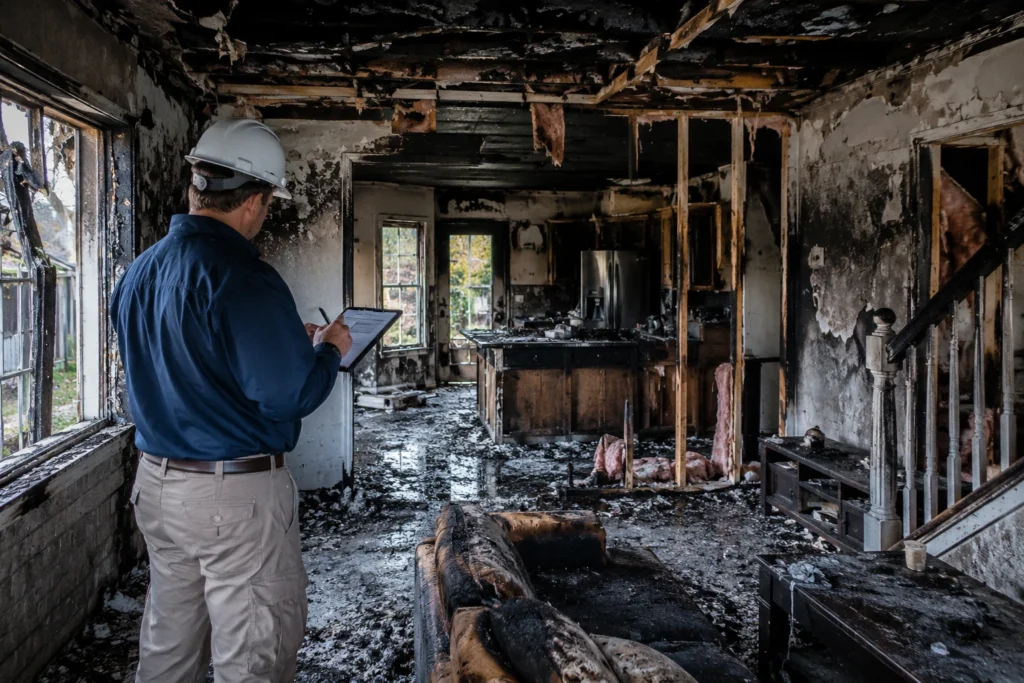
Not all adjusters possess the same level of experience. Taking time to evaluate qualifications can make a meaningful difference.
Verify Licensing
Always confirm that the adjuster holds appropriate licensing in Texas. Licensing helps ensure compliance with state requirements and professional standards.
Ask About Fire Claim Experience
Fire losses differ significantly from other property claims.
Questions to ask include:
- How many fire claims have you handled?
- Do you specialize in large-loss claims?
- Have you managed total-loss fires?
- How familiar are you with smoke remediation claims?
Experience matters.
Review References and Reputation
Look for:
- Client reviews
- Testimonials
- Industry reputation
- Professional references
A strong track record often reflects consistent service quality.
Understand Fees
Ask questions about:
- Fee structures
- Contract terms
- Services included
- Additional costs
Transparency helps prevent misunderstandings later.
Evaluate Communication Style
Good communication is essential.
Choose someone who:
- Responds promptly
- Explains issues clearly
- Provides regular updates
- Answers questions thoroughly
The claims process can last months. Working with a responsive professional makes the experience far less stressful.
Final Thoughts
Recovering from a fire is rarely easy. The emotional impact alone can be overwhelming. Add property damage, temporary housing concerns, repair decisions, and insurance paperwork, and the process quickly becomes challenging. That’s why understanding the role of a fire insurance adjuster is so important. From documenting losses and identifying hidden damage to reviewing estimates and negotiating settlements, a qualified adjuster can help property owners navigate one of the most difficult experiences they may ever face. For homeowners and business owners in New Braunfels, taking a proactive approach after a fire can protect both your property and your financial recovery. Most importantly, don’t rush the process. Document thoroughly. Stay organized. Ask questions. And make sure every aspect of the loss is properly evaluated before accepting a final settlement. The decisions made in the weeks following a fire can affect your recovery for years to come.
Frequently Asked Questions Can a fire insurance adjuster help if my claim has already been filed? Yes. A fire insurance adjuster can often assist during ongoing claims by reviewing documentation, identifying missed damages, and supporting negotiations. What is the difference between fire damage and smoke damage in an insurance claim? Fire damage refers to direct damage caused by flames, while smoke damage involves contamination, staining, and odors that can spread throughout the property.
Should I make temporary repairs after a fire? Yes. Most insurance policies require homeowners to take reasonable steps to prevent additional damage, provided it is safe to do so. How long should I keep records related to my fire claim? Keep all claim-related records until repairs are complete and the claim is fully settled, and consider retaining copies for several years afterward. Can smoke damage affect areas that were not burned? Yes. Smoke can travel through vents, walls, and open spaces, affecting rooms far from the original fire source.
What happens if additional fire damage is discovered during repairs? Newly discovered damage may support a supplemental claim, allowing additional costs to be submitted for review. Are electronics covered after a fire even if they still work? Possibly. Heat and smoke can cause hidden internal damage that may affect performance or lifespan.
Why are contents inventories so important after a fire? Contents inventories help establish ownership, condition, and value of damaged personal property for reimbursement purposes. Can a fire insurance adjuster help with commercial property claims? Yes. Fire insurance adjusters often assist with complex commercial losses involving buildings, equipment, inventory, and business interruption issues. When is the best time to contact a fire insurance adjuster? Many property owners seek assistance shortly after a fire, but professional help may also be valuable if claim disputes or delays arise later.
FAQs
Yes. A fire insurance adjuster can often assist during ongoing claims by reviewing documentation, identifying missed damages, and supporting negotiations.
Fire damage refers to direct damage caused by flames, while smoke damage involves contamination, staining, and odors that can spread throughout the property.
Yes. Most insurance policies require homeowners to take reasonable steps to prevent additional damage, provided it is safe to do so.
Keep all claim-related records until repairs are complete and the claim is fully settled, and consider retaining copies for several years afterward.
Yes. Smoke can travel through vents, walls, and open spaces, affecting rooms far from the original fire source.
Newly discovered damage may support a supplemental claim, allowing additional costs to be submitted for review.
Possibly. Heat and smoke can cause hidden internal damage that may affect performance or lifespan.
Contents inventories help establish ownership, condition, and value of damaged personal property for reimbursement purposes.
Yes. Fire insurance adjusters often assist with complex commercial losses involving buildings, equipment, inventory, and business interruption issues.
Many property owners seek assistance shortly after a fire, but professional help may also be valuable if claim disputes or delays arise later.