
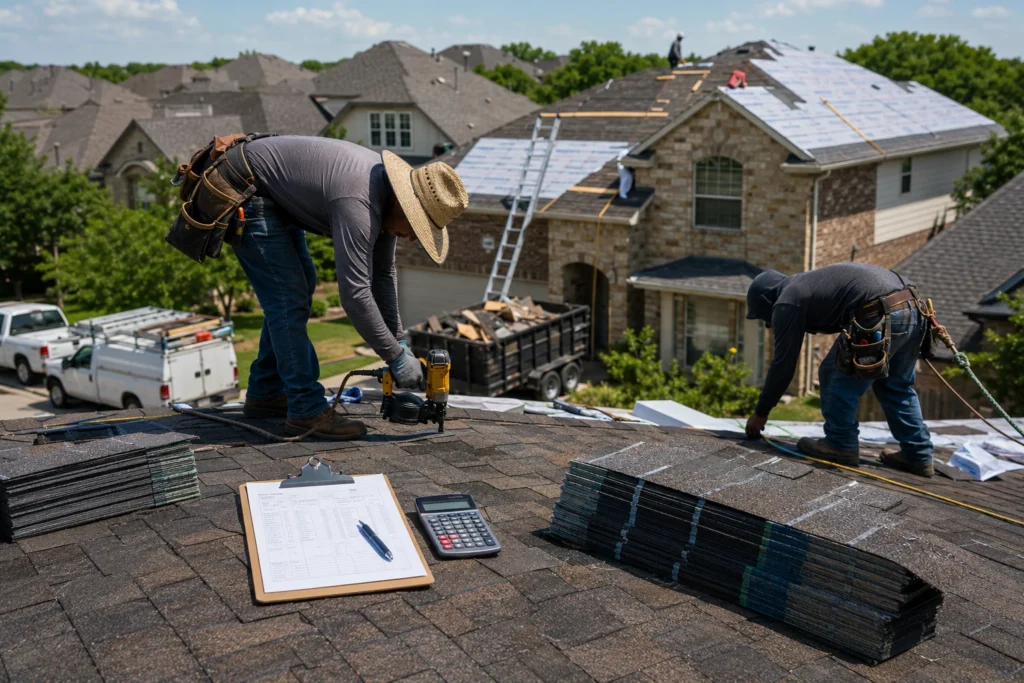
Hailstorms can turn an ordinary afternoon into a costly property damage situation in a matter of minutes. One storm passes through, and suddenly homeowners are dealing with dented gutters, damaged roofs, cracked siding, and the uncertainty of an insurance claim. That’s why understanding Public Adjuster vs. Insurance Adjuster for Hail Claims in New Braunfels, TX is so important. While both professionals play a role in the claims process, they represent very different interests. Knowing who works for whom can significantly impact your claim experience and potentially your final settlement.
Many property owners assume that the insurance adjuster assigned to their claim is there to protect their interests. It’s an understandable assumption. After all, that adjuster is the person inspecting the damage and discussing the loss. However, the reality is more nuanced. Insurance adjusters and public adjusters serve entirely different functions. One works on behalf of the insurance company. The other works on behalf of the policyholder. That distinction can become extremely important when thousands or even tens of thousands of dollars are at stake. If you’re dealing with hail damage in New Braunfels, understanding the differences between these professionals can help you make informed decisions and avoid costly mistakes.
Understanding Hail Claims in New Braunfels, TX
Central Texas is no stranger to severe weather. Every year, hailstorms impact homes and commercial properties throughout the region. Some storms produce minor cosmetic damage. Others leave behind extensive destruction that requires full roof replacements and significant repairs.
The challenge is that hail damage isn’t always obvious. A broken window is easy to identify. Roof damage often isn’t. Many forms of hail damage remain hidden until leaks begin appearing weeks or months later. By that point, documentation becomes more difficult and disagreements about the cause of damage may arise.
Common forms of hail damage include:
- Bruised asphalt shingles
- Granule loss
- Cracked roofing tiles
- Damaged metal roofing panels
- Dented gutters and downspouts
- Window screen damage
- HVAC system impacts
- Water intrusion
Some damage is visible immediately. Some damage takes time to reveal itself. Either way, a thorough inspection is critical.
Why Hail Claims Often Become Disputed
Most homeowners expect the claims process to be straightforward. A storm occurs. Damage is documented. The insurance company pays for repairs. The property is restored. Unfortunately, things do not always unfold that smoothly. Disputes frequently develop because different parties may view the same damage differently.
Common areas of disagreement include:
- Whether damage was caused by hail
- Whether damage requires repair or replacement
- The extent of affected areas
- Building code requirements
- Material pricing
- Labor costs
- Scope of repairs
For example, a contractor may recommend replacing an entire roofing system due to widespread impacts. An insurance company estimate may only include partial repairs. Neither side necessarily believes they are acting improperly. They simply may have different opinions regarding the damage. Those differences can significantly affect settlement values.
What Is an Insurance Adjuster?
An insurance adjuster is a professional responsible for investigating and evaluating insurance claims. When you file a hail damage claim, the insurance company typically assigns an adjuster to inspect the property and determine what damages may be covered under the policy.
Insurance adjusters perform an important function. Without them, claims could not be processed efficiently. However, it is essential to understand who they represent. Insurance adjusters represent the insurance company. Their responsibility is to evaluate the claim on behalf of the insurer. That fact alone does not imply anything negative. It simply defines their role.
Types of Insurance Adjusters
There are generally two types of insurance adjusters homeowners encounter.
Staff Adjusters
Staff adjusters are direct employees of insurance carriers. They receive compensation from the insurer and handle claims according to company procedures and guidelines.
Independent Adjusters
Independent adjusters are contractors hired by insurance companies. They are often utilized after major weather events when claim volumes increase dramatically. Although they are not direct employees, they still work on behalf of the carrier that hires them. Their client remains the insurance company.
What Insurance Adjusters Do
Insurance adjusters are typically responsible for:
- Inspecting property damage
- Photographing affected areas
- Reviewing policy coverage
- Measuring repair quantities
- Preparing estimates
- Recommending settlement amounts
Their findings become a key part of the claim file. Insurance companies rely on those findings when making coverage and payment decisions.
Advantages of Insurance Adjusters
Insurance adjusters provide several benefits during the claims process. First, they facilitate claim administration. Second, they understand insurance policies and procedures. Third, they help move claims toward resolution. For many straightforward hail claims, their inspection may be sufficient to accurately identify covered damages and determine an appropriate settlement. When damage is limited and the scope is clear, the process can proceed relatively smoothly.
Limitations Homeowners Should Understand
However, homeowners should also understand potential limitations. After a significant hailstorm, adjusters may be handling dozens of claims every week. Sometimes hundreds. The volume can be overwhelming. As a result, inspections may be shorter than homeowners expect. Certain damages may require additional review. Some issues may not become apparent until later. This does not automatically mean mistakes were made. It simply reflects the realities of large-scale catastrophe response. Nevertheless, those realities can affect claim outcomes.
What Is a Public Adjuster?
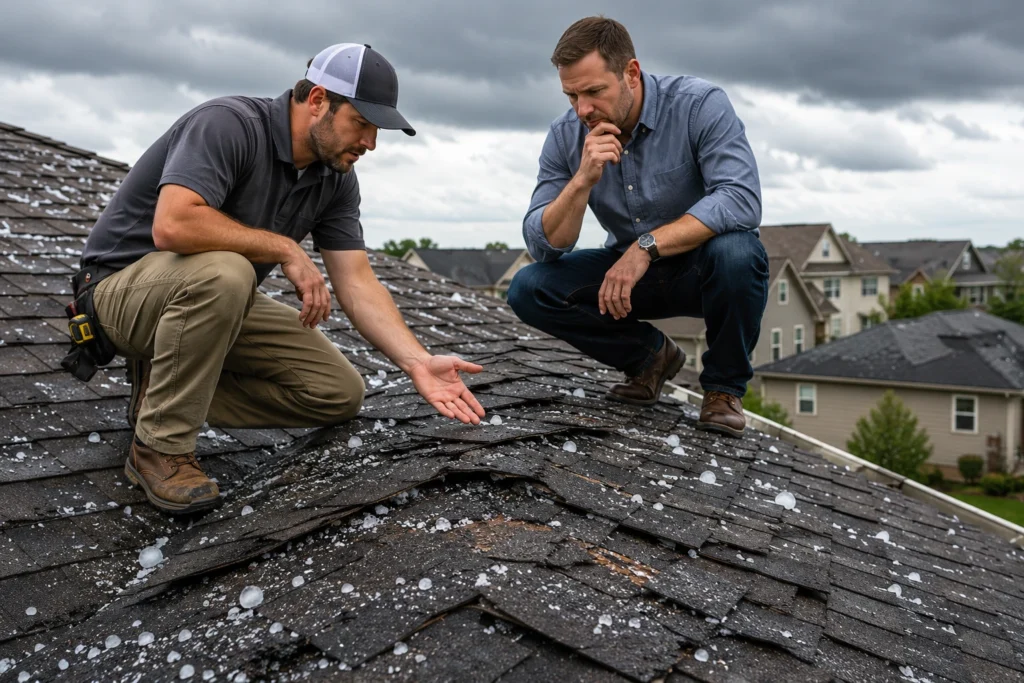
A public adjuster serves an entirely different purpose. Rather than representing the insurance company, a public adjuster represents the policyholder. Their job is to advocate for the property owner throughout the claim process. That distinction is at the heart of the Public Adjuster vs. Insurance Adjuster for Hail Claims in New Braunfels, TX conversation. Both professionals inspect damage. Both may prepare estimates. Both understand insurance claims. But they do not represent the same interests.
Independent Damage Assessments
Public adjusters perform their own inspections. They do not simply rely on the insurance company’s findings.
Instead, they conduct independent evaluations of:
- Roofing systems
- Gutters
- Flashing
- Siding
- Interior damage
- Water intrusion
- Structural concerns
Their objective is to identify the full scope of covered damages. Not a partial scope. Not a preliminary scope. The complete scope.
Policy Analysis
Insurance policies can be complex documents. Coverage provisions, exclusions, endorsements, and limitations often create confusion. Many homeowners never fully review their policy until a loss occurs.
Public adjusters analyze policy language and evaluate:
- Coverage provisions
- Exclusions
- Additional coverages
- Deductibles
- Ordinance and law provisions
- Endorsements
This review helps identify benefits that may apply to a specific claim.
Documentation Development
Strong claims require strong evidence. That principle applies regardless of who represents the claim.
Public adjusters often gather:
- Detailed photographs
- Drone imagery
- Measurement reports
- Contractor evaluations
- Weather documentation
- Repair estimates
- Supporting claim evidence
The goal is to create a well-supported claim package capable of standing up to scrutiny. Documentation matters. In many cases, documentation determines outcomes.
Public Adjuster vs. Insurance Adjuster for Hail Claims in New Braunfels, TX
When comparing Public Adjuster vs. Insurance Adjuster for Hail Claims in New Braunfels, TX, representation is the most important difference. Everything else stems from that single distinction.
| Category | Public Adjuster | Insurance Adjuster |
| Represents | Policyholder | Insurance Company |
| Primary Goal | Maximize covered recovery | Evaluate claim for insurer |
| Inspection Approach | Independent | Carrier-directed |
| Policy Review | Extensive | Coverage determination |
| Negotiation | Active advocacy | Administrative role |
| Supplemental Claims | Frequently pursued | Evaluated by carrier |
| Compensation | Paid by policyholder | Paid by insurer |
Neither role is inherently better. Neither role is inherently worse. They simply serve different purposes within the insurance claim process. Understanding those purposes helps property owners make informed decisions when significant hail damage occurs.
The Importance of Representation
The simplest way to understand the difference between these professionals is to ask one question: Who do they work for? An insurance adjuster works for the insurance company. A public adjuster works for the policyholder. That difference may seem small at first. It isn’t. Representation influences how a claim is investigated, documented, and negotiated.
Consider a situation where a hailstorm damages a home’s roof, gutters, and exterior metal components. An insurance adjuster may inspect the property and identify the most obvious damages. A public adjuster may conduct a more extensive review, looking for additional affected components, code-related issues, and hidden damage.
The result could be two very different estimates. That does not automatically mean one estimate is correct and the other is wrong. It simply demonstrates how representation can affect claim development. The larger and more complicated the loss becomes, the more important this distinction often becomes.
How Hail Damage Gets Missed
One of the biggest challenges in hail claims is that not all damage is easy to identify. Many homeowners expect hail damage to be obvious. Sometimes it is. Often it isn’t. Certain types of impacts leave subtle evidence that requires careful inspection.
Roofing Components Commonly Overlooked
A roof is much more than shingles. It contains numerous components that work together as a complete system.
Examples include:
- Ridge caps
- Starter strips
- Pipe boots
- Flashing
- Drip edge
- Ventilation components
- Roof vents
Damage to any of these components may affect repair costs and project scope. If those items are not included in an estimate, repair budgets can fall short.
Hidden Interior Damage
Not every leak appears immediately. Water intrusion can develop gradually.
Weeks may pass before homeowners notice:
- Ceiling stains
- Drywall damage
- Insulation saturation
- Paint deterioration
By that point, additional repairs may be necessary. This is one reason thorough documentation and follow-up inspections are so important.
Building Code Upgrades
Another area that frequently generates disputes involves building codes.
Homes constructed years ago may not meet current standards.
When significant repairs occur, upgrades may be required.
Potential examples include:
- Ventilation improvements
- Flashing modifications
- Fastener upgrades
- Underlayment requirements
These costs can significantly affect claim values. Failing to identify them early may lead to underfunded repair projects.
Why Documentation Wins Claims
Strong claims are rarely built on opinions. They are built on evidence. That principle applies whether a homeowner handles the claim personally, works with a contractor, or hires a public adjuster.
The strongest claims typically contain:
- Detailed photographs
- Property measurements
- Weather documentation
- Repair estimates
- Inspection reports
- Communication records
Successful claim documentation often resembles a structured forensic investigation. Inspectors, contractors, and adjusters gather physical evidence, photographs, measurements, and supporting records to establish what occurred and how extensive the damage may be. Much like the discipline of Forensic Science, the objective is to rely on verifiable evidence rather than assumptions when evaluating property damage and determining repair requirements. The goal is simple. Create a clear story supported by facts. Insurance companies evaluate evidence. The stronger the evidence, the stronger the claim.
Maintaining a Claim File
One of the smartest actions property owners can take is creating a dedicated claim file.
Store:
- Inspection reports
- Contractor estimates
- Email correspondence
- Claim letters
- Invoices
- Photographs
Organization reduces confusion and helps preserve important information throughout the claim process.
The Role of Xactimate in Hail Claims
Most property insurance estimates are created using specialized estimating software. One of the most widely used platforms is Xactimate. Insurance adjusters use it. Public adjusters use it. Many contractors use it.
The software helps generate estimates based on:
- Material pricing
- Labor rates
- Equipment costs
- Regional market conditions
However, software does not determine claim value by itself. The estimate depends on the information entered. If roofing components are omitted, those costs may not appear. If measurements are incomplete, estimates may be lower than actual repair requirements. This is why scope development is so important. A complete scope supports a complete estimate. An incomplete scope may produce an incomplete estimate.
Real-World Example: Same Hail Claim, Different Outcomes
Let’s look at a realistic scenario. A hailstorm impacts a residential property in New Braunfels. The homeowner files a claim. An insurance adjuster performs an inspection and prepares an estimate totaling $18,000.
The estimate includes:
- Roof repairs
- Minor gutter repairs
- Limited accessory replacement
The homeowner then consults a public adjuster.
A second inspection identifies:
- Additional roof slope damage
- Damaged flashing
- Vent replacement requirements
- Interior staining
- Code-related upgrades
A revised estimate reaches $31,000.
What happened? The storm didn’t change. The property didn’t change. The inspection scope changed. This example illustrates why different professionals sometimes arrive at different conclusions regarding the same property.
When an Insurance Adjuster May Be Enough
Not every claim requires outside representation. In some situations, the insurance company’s inspection may be sufficient.
Minor Damage Claims
Smaller losses often involve fewer disputes. Repairs are limited. Costs are easier to calculate.
Straightforward Repairs
When damage is obvious and repair requirements are clear, claims often move smoothly through the process.
No Coverage Disagreements
Claims involving undisputed coverage and well-documented damage generally face fewer complications.
Experienced Property Owners
Some homeowners have backgrounds in construction, roofing, or property management. They may feel comfortable evaluating estimates and managing claim discussions independently. Every claim is unique. There is no universal answer.
When Hiring a Public Adjuster Makes Sense
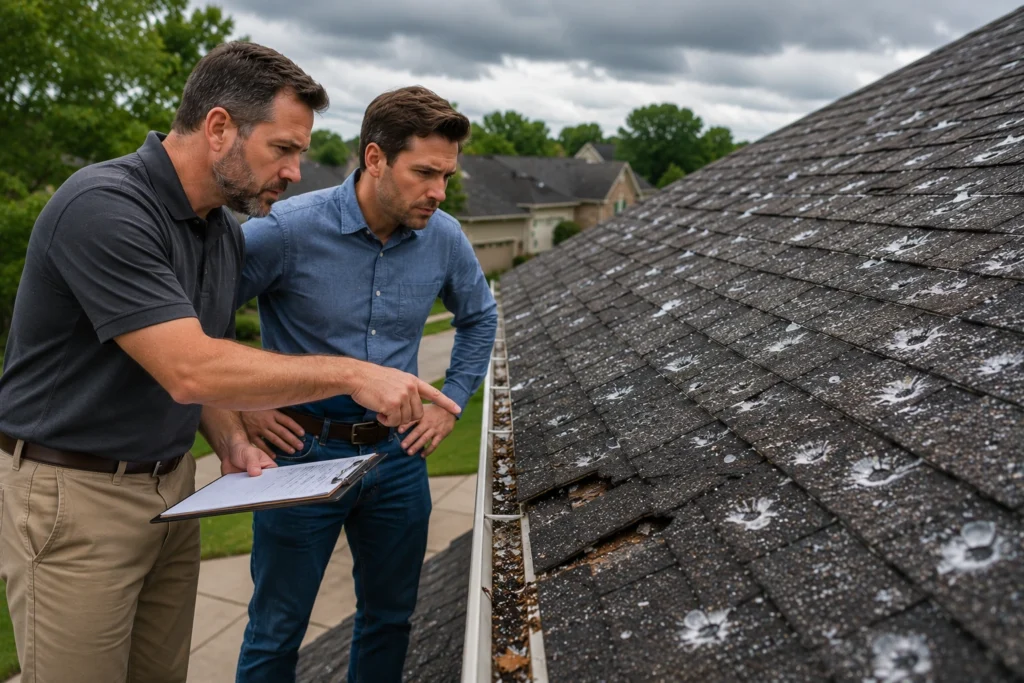
Certain situations increase the value of independent representation.
Large Hail Losses
As claim values increase, financial stakes increase as well. A relatively small estimating difference can translate into thousands of dollars.
Claim Denials
Denied claims often benefit from additional review. Sometimes overlooked evidence exists. Sometimes additional inspections reveal new information.
Underpayment Concerns
Many property owners contact public adjusters because they believe the settlement offer does not reflect actual repair costs. That concern may be justified. Or it may not. A second professional opinion can help determine whether the estimate accurately reflects the damage. In many cases, additional damage or overlooked repair items lead to Hail Damage Claim Supplements, which are submitted to support a revised settlement based on newly documented findings.
Commercial Property Claims
Commercial losses often involve:
- Multiple buildings
- Flat roofing systems
- Tenant spaces
- Complex repair requirements
These claims typically require extensive documentation and coordination.
Multiple Inspection Disagreements
When contractors, engineers, and adjusters all have different opinions, independent claim representation may help organize the evidence and clarify the issues involved.
Questions to Ask Before Hiring Any Adjuster
Before working with any claim professional, ask thoughtful questions.
Are You Licensed in Texas?
Licensing should always be verified.
How Much Hail Claim Experience Do You Have?
Storm claims require specialized knowledge. Experience matters.
How Do You Document Damage?
Ask about:
- Photography procedures
- Measurement methods
- Drone usage
- Reporting practices
Do You Use Xactimate?
Understanding how estimates are prepared can provide valuable insight.
How Are Supplements Handled?
Additional damage is sometimes discovered after repairs begin. Understanding the supplement process is important. What Is Your Fee Structure? Always understand costs before entering into any agreement. Transparency matters.
Common Myths About Public Adjusters
Several myths continue to circulate regarding public adjusters.g Let’s clear up a few of them.
Myth: Public Adjusters Only Handle Denied Claims
Not true. Many become involved before disputes arise.
Myth: Hiring a Public Adjuster Creates Conflict
Professional claim advocacy focuses on documentation and evidence. Not confrontation.
Myth: Insurance Companies Refuse to Work With Public Adjusters
Insurance companies regularly interact with public adjusters throughout Texas.
Myth: Small Claims Never Need Review
Even smaller claims can contain overlooked damage.
Myth: Insurance Estimates Are Always Perfect
Insurance adjusters are skilled professionals. However, no inspection process is immune to human error. Everyone can miss something. That’s simply reality.
Why New Braunfels Property Owners Face Unique Challenges
The discussion surrounding Public Adjuster vs. Insurance Adjuster for Hail Claims in New Braunfels, TX becomes even more important when local conditions are considered. New Braunfels has experienced tremendous growth over the past several years. New neighborhoods continue to emerge. Property values continue to rise. Construction costs continue to increase. At the same time, severe weather remains a recurring concern. These factors create a unique environment for property insurance claims.
Frequent Hail Activity
Central Texas regularly experiences hail-producing storms. Some years are relatively mild. Others are exceptionally active. When widespread storms occur, insurance companies may receive thousands of claims in a short period. That surge in claim volume can place pressure on the entire claims process. Inspections increase. Contractor demand rises. Repair schedules become longer. Property owners often find themselves competing for attention and resources.
Rising Construction Costs
Construction pricing rarely remains static. Material costs fluctuate. Labor costs fluctuate. Equipment costs fluctuate. A roof replacement estimate prepared six months ago may differ significantly from one prepared today. These market conditions can create challenges when claim settlements fail to reflect current rebuilding expenses.
Building Code Requirements
As communities evolve, building standards evolve as well. A roofing system installed fifteen or twenty years ago may not meet current requirements. When substantial repairs occur, local regulations may require upgrades.
Potential examples include:
- Improved ventilation
- Updated flashing requirements
- Enhanced fastening systems
- Underlayment improvements
These upgrades can significantly affect project costs. Failing to account for them may leave homeowners paying unexpected expenses out of pocket.
Increasing Property Values
Property values throughout New Braunfels have grown substantially. As home values increase, replacement costs often increase as well. Larger homes. More complex roof designs. Premium building materials. All of these factors can contribute to larger and more complicated hail claims. The financial consequences of an incomplete estimate become more significant as property values rise.
How to Choose the Right Public Adjuster in New Braunfels
If you determine that professional representation may be beneficial, selecting the right public adjuster is critical. Not all adjusters have the same experience, resources, or approach. Taking time to evaluate your options can make a meaningful difference.
Verify Licensing
Always start with licensing. Public adjusters operating in Texas should hold the appropriate state credentials. Verification is simple and provides an important layer of protection.
Ask About Hail Claim Experience
Insurance claims come in many forms. Water losses. Fire losses. Wind losses. Hail losses. Each type presents unique challenges. Look for someone with substantial experience handling hail-related property damage claims.
Evaluate Communication Practices
One of the most common frustrations homeowners experience involves poor communication.
Ask questions such as:
- Who will handle my claim?
- How often will updates be provided?
- What is the preferred communication method?
- How quickly can I expect responses?
Clear communication helps reduce confusion and stress throughout the process.
Review Documentation Procedures
Strong claims require strong evidence. Ask prospective adjusters how they document damage.
Topics may include:
- Photography standards
- Measurement methods
- Drone inspections
- Reporting procedures
The quality of documentation often influences the strength of negotiations.
Understand the Contract
Never rush through a contract. Read every page. Ask questions. Understand the fee structure, responsibilities, and expectations before signing. Professional claim representation should always begin with transparency.
Avoid Unrealistic Promises
Be cautious of anyone guaranteeing outcomes. No ethical professional can guarantee a specific settlement amount. Every claim is different. Every property is different. Every insurance policy is different. Trust professionals who focus on facts, evidence, and realistic expectations.
Building the Strongest Hail Claim Possible
Whether you decide to work directly with the insurance company or hire a public adjuster, there are several actions you can take to strengthen your claim.
Document Damage Immediately
Timing matters. As soon as conditions are safe, begin documenting visible damage.
Photograph:
- Roof impacts
- Gutters
- Downspouts
- Siding
- Windows
- Exterior metal surfaces
- Interior leaks
Take wide-angle photographs. Take close-up photographs. Capture as much detail as possible. Evidence collected immediately after a storm is often the most persuasive.
Maintain Organized Records
A well-organized claim file can become one of your most valuable tools.
Store:
- Inspection reports
- Estimates
- Invoices
- Photographs
- Claim correspondence
- Weather reports
Keeping everything in one location makes it easier to track developments and respond to requests.
Keep a Communication Log
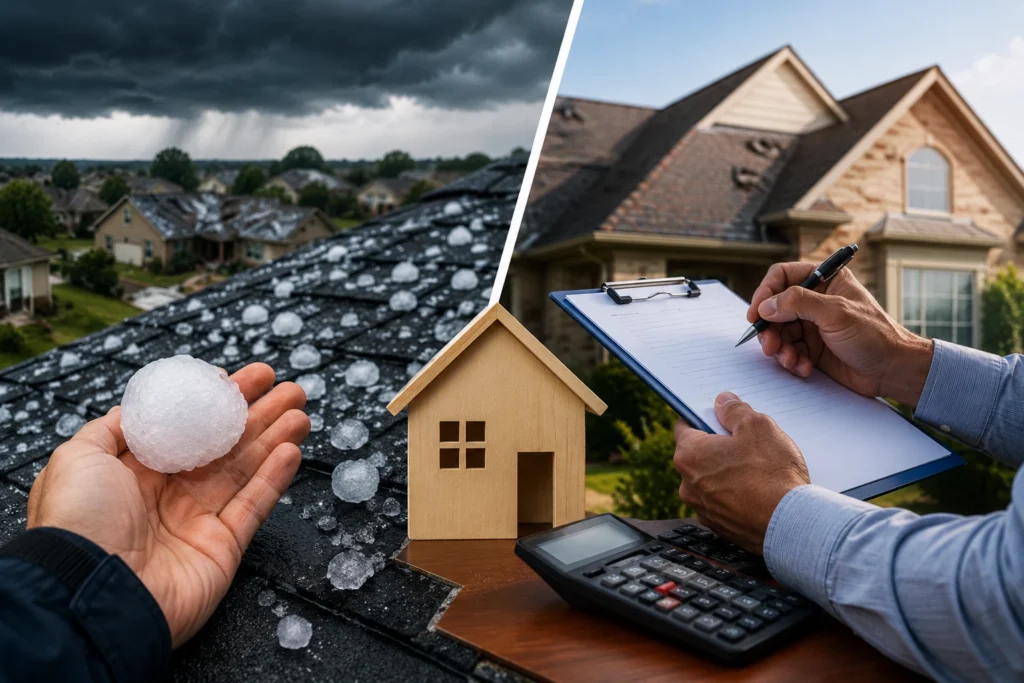
Many homeowners overlook this step. That can be a mistake.
Maintain a simple record containing:
- Dates
- Times
- Names
- Phone numbers
- Discussion summaries
Claims sometimes extend for weeks or months. Having a written history of conversations can prove extremely valuable.
Obtain Multiple Opinions
If significant damage exists, consider obtaining more than one professional evaluation. Different professionals may identify different issues. Additional inspections can provide clarity and strengthen decision-making.
Understand Your Policy
Many claim disputes begin because property owners misunderstand coverage.
Take time to review:
- Deductibles
- Exclusions
- Coverage limits
- Endorsements
- Additional coverages
A better understanding of your policy helps you navigate the process more confidently.
Stay Engaged Throughout the Process
Do not assume others will manage every detail perfectly. Review documents. Ask questions. Request clarification when necessary. An informed property owner is often in the best position to identify potential issues before they become larger problems.
Final Verdict: Public Adjuster vs. Insurance Adjuster for Hail Claims in New Braunfels, TX
After examining the differences, one conclusion becomes clear. The debate surrounding Public Adjuster vs. Insurance Adjuster for Hail Claims in New Braunfels, TX is not about determining which professional is universally better. It is about understanding representation. Insurance adjusters serve an essential role within the claims process. They investigate losses. They evaluate damage.
They help insurance companies administer claims. Public adjusters serve a different role. They advocate for policyholders. They perform independent evaluations. They document damages. They negotiate on behalf of property owners. Both professionals can contribute valuable expertise. The key difference is who they represent. For smaller, straightforward claims, the insurance company’s process may work perfectly well.
For larger, more complex, disputed, or underpaid claims, independent representation may provide additional value. Every situation is unique. The right approach depends on the facts of the claim, the extent of the damage, and the goals of the property owner.
Conclusion
Hail damage claims can be stressful. They can also be financially significant. A damaged roof, compromised exterior components, or hidden water intrusion can create repair costs that quickly reach tens of thousands of dollars. That is why understanding Public Adjuster vs. Insurance Adjuster for Hail Claims in New Braunfels, TX matters so much.
Insurance adjusters and public adjusters both possess valuable expertise, but they serve different interests throughout the claims process. One represents the insurance company. One represents the policyholder. Understanding that distinction allows property owners to make informed decisions when severe weather strikes.
Ultimately, successful hail claims are built on the same foundation regardless of who represents them. Thorough inspections. Strong documentation. Accurate estimates. Clear communication. Careful policy review. When those elements come together, property owners place themselves in the strongest possible position to pursue a fair and accurate claim outcome after a damaging New Braunfels hailstorm.
FAQs
A public adjuster represents the policyholder, while an insurance adjuster represents the insurance company during the claims process.
Yes. Public adjusters can inspect damage, review policy coverage, document losses, and negotiate with the insurance company on your behalf.
Yes. Public adjusters must be licensed by the state of Texas to legally represent policyholders in insurance claims.
You may want to consider one if your claim is large, denied, underpaid, or involves complex damage that requires extensive documentation.
No. No professional can guarantee a specific outcome, but a public adjuster may help ensure all covered damages are properly documented and evaluated.
Yes. Damage to roofing materials, flashing, vents, or other components may not be immediately visible and can impact repair costs.
They are additional claim submissions that document newly discovered damage or overlooked repair items after the initial estimate is completed.
Yes. Many insurance adjusters use industry-standard software such as Xactimate to prepare repair estimates.
Keep photographs, inspection reports, estimates, receipts, emails, claim letters, and notes from conversations related to the claim.
Strong documentation provides evidence of damage, supports repair costs, and helps reduce disputes during the claims process.